
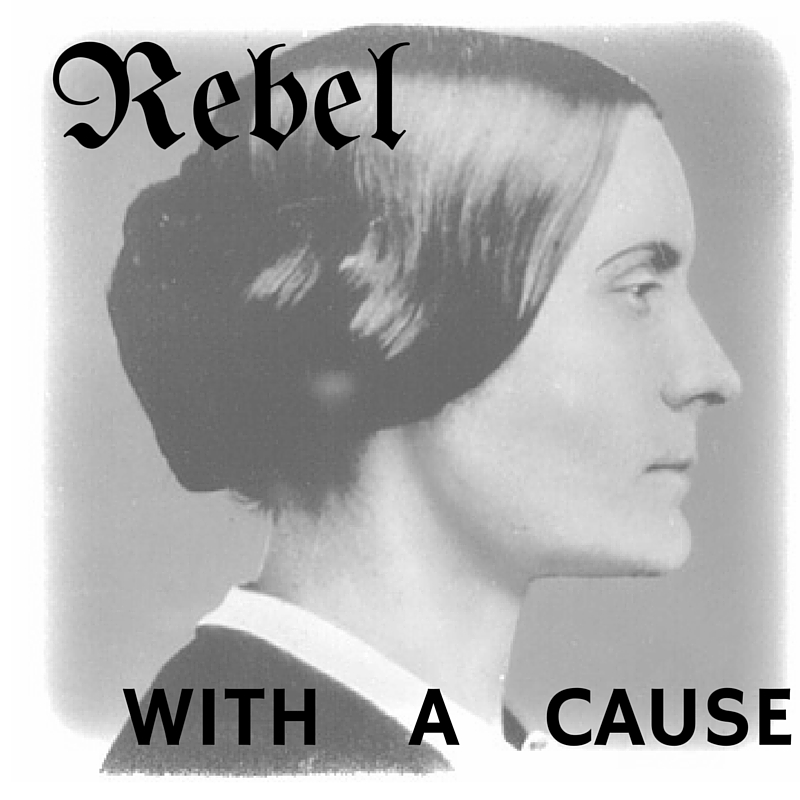
As you probably know, today is President’s Day. As you may or may not know, today is also Susan B Anthony’s birthday. Here are a few things I learned from scratching the surface of her life story…
1. To be a rebel, you gotta find a cause. Or six.

Throughout her life, Anthony fought for equality above all else.
Abolitionist: Members of Anthony’s family were very involved in the anti-slavery movement, and in 1856 Susan became an agent for the American Anti-Slavery Society. She hung posters and gave speeches calling for an end to slavery. In 1863 Anthony and Elizabeth Cady Stanton organized a Women’s National League to support the 13th Amendment. In her newspaper, The Revolution, she argued against lynchings and racial prejudice.
Educational Reform: In 1846 Anthony was a teacher and became active in calling for equality in the classroom. She called for better pay for women teachers and for equal education opportunities for all students, regardless of race, gender, or their family’s former state of servitude. In the 1890s, she raised $50,000 to ensure that the University of Rochester would admit female students.
Labor Activist: Anthony advocated for an eight-hour work day in her newspaper, and she encouraged women who were excluded from male dominated trade unions to form their own unions. And of course, she called for equal pay for equal work.
Temperance Worker: Anthony was raised a Quaker, and as such, she believed drinking alcohol was sinful. She was an active member of the Daughters of Temperance, a group of women who drew attention to the effects of drunkenness on families and pushed for stronger liquor laws. When she was denied the right to speak at a convention of the Sons of Temperance, she held a meeting of her own. In 1853 Anthony and Elizabeth Cady Stanton endeavored to petition the State Legislature to pass a law limiting the sale of liquor. The petition was rejected because most of the 28,000 signatures on it were from women. Anthony and Stanton realized that women needed the vote so that politicians would listen to them, and they resigned from the Temperance Society to focus on getting women the right to vote.
Suffragist: Anthony and Stanton had believed that the Republicans would reward women for their work in the abolition movement by giving them the right to vote. When that didn’t happen, they were disappointed. Then they got to work. They founded the American Equal Rights Association and began publishing their newspaper, The Revolution. Anthony toured the west, giving speeches and raising awareness. She gathered petitions with thousands of signatures and spoke in front of every Congress from 1869 to 1906 to ask for passage of a suffrage amendment. She was a leader in the suffrage movement until she retired as president of the National American Women Suffrage Association in 1900 (she was 80 years old). However, she was still an active and respected voice in the movement. She presided over the International Council of Women in Berlin in 1904 and became honorary president of Carrie Chapman Catt’s International Women Suffrage Alliance. Women finally got the vote when Congress passed the Ninteenth Amendment (also known as the Susan B Anthony Amendment) in 1920, fourteen years after Anthony’s death.
2. Haters gonna hate.

For just about every cause she championed, somebody hated on her:
- She faced mobs, threats, and was even hung in effigy for her efforts to end slavery.
- Ironically, Anthony’s work for women in labor got her labeled as an “enemy of labor.” She was president of the Workingwomen’s Central Association, which drew up reports on working conditions and provided educational opportunities for working women. She supported the Sewing Machine Operators Union and the newly formed women’s typesetters union. She tried to establish trade schools for women printers. When printers went on strike in New York, saw it as an opportunity for employers to see that women could do the job just as well as men could and therefore deserved equal pay for their work. So, she encouraged employers to hire women to take the place of the strikers, and was accused of strike-breaking and being an enemy of labor.
- Injustice was served. In 1872 Anthony was arrested for voting (she also refused to pay her streetcar fare on the way to the police station). She also refused to pay her bail and applied for habeas corpus (in which an individual reports an unlawful detention or imprisonment), but her lawyer paid her bail and kept the case from going to the Supreme Court. She was indicted near her home, so the Rochester District Attorney asked for a change of venue, fearing that a jury in Albany might be prejudiced in her favor. The judge in the new venue, Canandaigua, made sure there was no issue with jury prejudice when he instructed them to find her guilty without discussion– the jury did not even get to discuss the verdict! The judge fined her and ordered her to pay courtroom fees. When she refused to pay, he chose not to imprison her, thereby denying her chance to appeal.
3. Stay focused.
While working in the Temperance Movement, Anthony made a tough decision. In additon to speaking and gathering petitions, Anthony and Stanton had drawn attention to the case of Abby McFarland. Abby’s drunken and abusive husband, Daniel, had shot and killed the man Abby divorced Daniel to marry. Daniel was aquitted on a plea of temporary insanity and given custody of their son. But even though temperance was a cause that was dear to Anthony’s heart, she decided to stay focused and not support Prohibition because it distracted from the bigger issue– women getting the vote.

4. Sometimes the most obvious answer is the right one.
In 1846, when she was a teacher, Anthony argued that girls should be educated as well as boys, because there is no inherent difference in their brains. Over 100 years later, science is backing her up.

5. Girl, you better work.
What blew me away the most when I was taking this little glimpse into Anthony’s life was her constant WORK. She seems to have been indefatigable in her pursuit of equality. She reminded me that if there is something you want, pursue it relentlessly. She never saw the fruits of her labor, but she didn’t give up. She stayed the course. And I am so grateful that she did.

I got my info about Susie B from susanbanthonyhouse.org









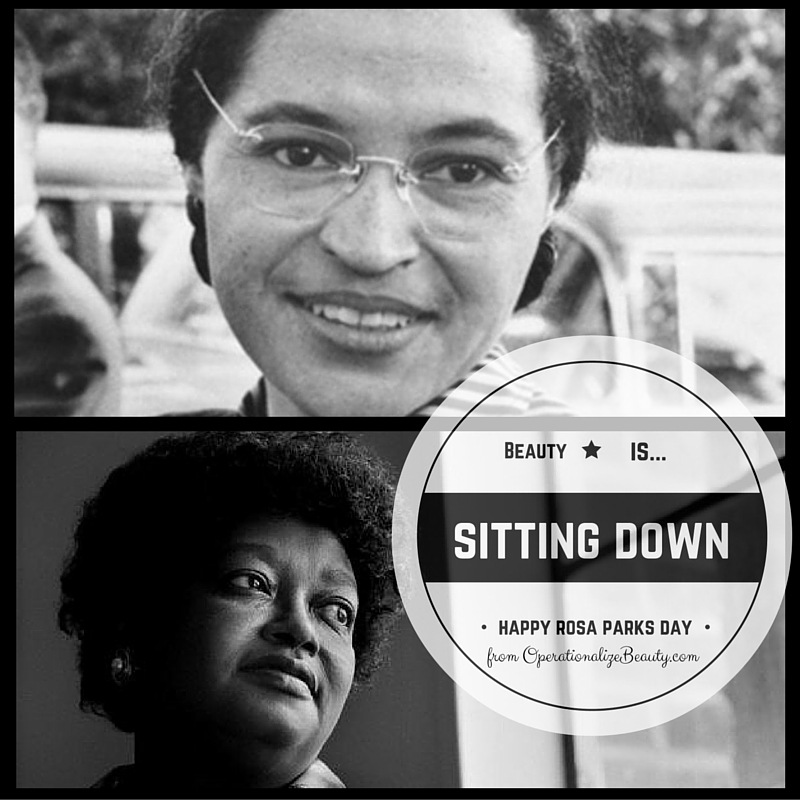
 wide attention to Montgomery Alabama, where transportation segregation was rampant. And legal. What I didn’t realize– and you may not have known either– is that Rosa was sitting in “her” section of the bus. So, she was actually following the law. But when all the seats filled up and a white man was left standing, the bus driver demanded that Rosa give up her seat for him. She refused. And the rest is HERtory.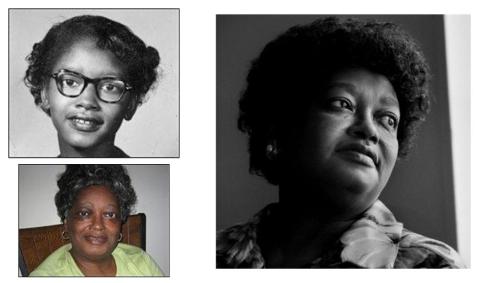



 US on a LEGAL visa
 Question: Human trafficking is undoubtedly a big problem. But just HOW big seems to be tricky to pin down–there are so many numbers floating around out there. I have read that there as many as 30 MILLION victims of trafficking worldwide today. Is that an accurate estimate? And how are these estimates made?
 see one or two things, it doesn’t mean that you automatically have a case of human trafficking. Instead,
  Answer:
  concentration in education from the University of Denver. When I was little I wanted to be a lot of things (veterinarian, hairdresser, actress) but I also wanted to be a teacher. My mom was a teacher and I would use all her leftover workbooks and supplies to play school. I even had a miniature chalkboard that hung in our basement play area.

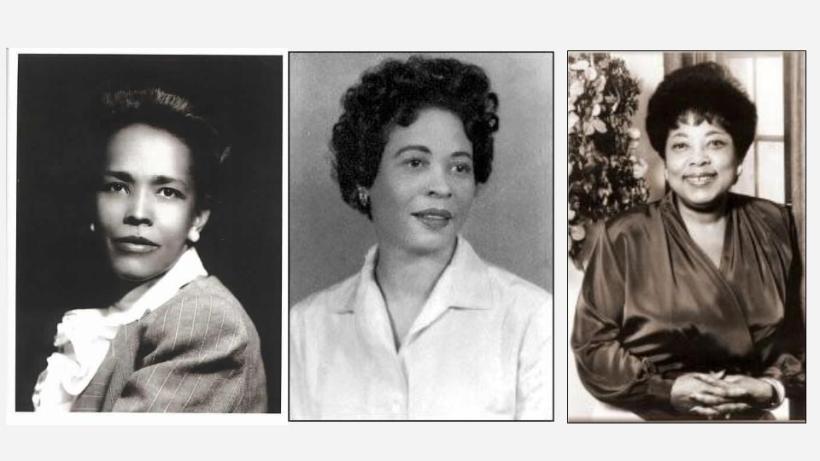




 One of her objects of affection was German-Swiss artist Henri Fuseli (left), to whom she grew quite close. Though details are not known for sure, it is said that at one point, Mary showed up at his doorstep and asked to move in with he and his wife. Allegedly, she claimed she sought no physical relationship with Fuseli and posed no threat to his marriage; she simply could not live without seeing and talking to him daily. She needed a spiritual connection with him. Fuseli’s wife threw Mary out and forbade Henri from ever speaking to her again. Later, Mary would propose a similar, and incredibly unorthodox, living arrangement with her estranged husband (and father of her first child) and his paramour.
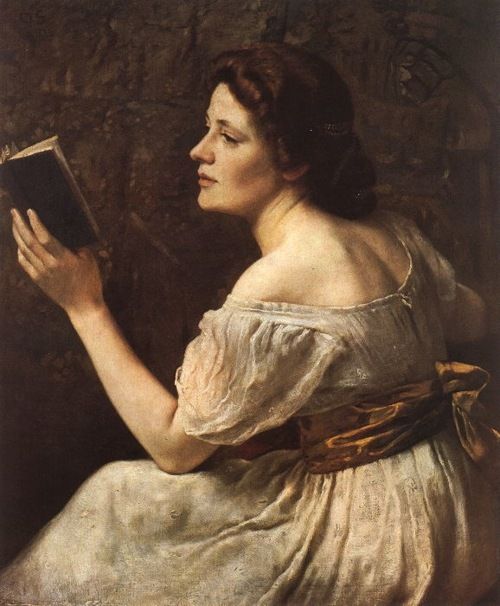
 energy and focus, as well as boughts of depression and self-doubt. Those close to her, like friend and publisher Joseph Johnson (right), learned to maneuver these dark spaces of Mary’s personality. Once, when penning a rebuttal to Edmund Burke’s Reflections on the Revolution in France, she expressed to Johnson that she wasn’t sure if she should continue. Having already printed what she had written so far, he assured her that if she didn’t feel up to the task of completing the work, he would throw the printed pages into the fire and forget the piece altogether. With the perfect response, Johnson struck a cord with the proud and zealous Mary, who quickly got back to work and completed the piece.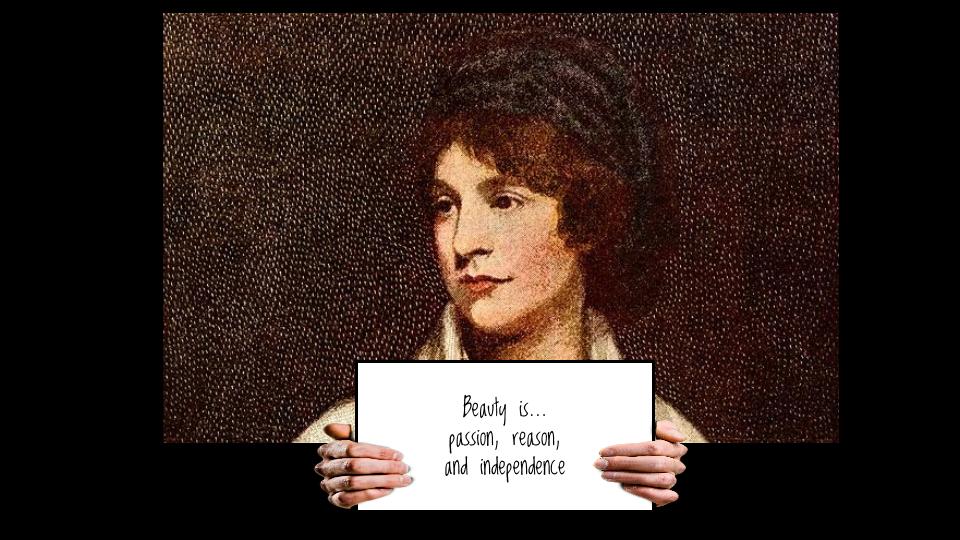

 OperationalizeBeauty