

In celebration of Women’s History Month, I chatted with Dr Penny Weiss, the Director of Women’s Studies at St Louis University.
Can you give me just a little bit of background. Where are you from? Where did you go to school? What brought you to St Louis?
I am a native of Miami, Florida and a graduate of the University of South Florida. I went to
 grad school in the Midwest and have since spent most of my adult life here. I came to STL in 2008 because I had the chance to move from a position in a political science department to one in a women’s studies program, and from a rural setting outside a small city to the big city. It was a phenomenal switch!
What drew you to Women’s Studies? Was there one turning point or “ah ha!” moment?
I came of age when WS programs were starting and the women’s movement was hitting another peak. What drew me? Everything: the questions, the people, the politics, the passion, the purpose, the activism, the festivals. Women’s Studies, like feminism itself, made (and continues to make) sense of my life.
What is a common misconception you encounter when you are discussing feminism?
I think, unfortunately, that people know more about what anti-feminists say feminism is than what feminists say. Among the most persistent misconceptions: reproductive justice only means a right to abortion; most religions are incompatible with feminism; feminism means whatever any individual chooses to say it means (and feminism means you can’t criticize any choice anyone makes); and then there are the oldies but goodies…feminists hate men, are all lesbians, are selfish, are (too) aggressive and demanding, are unreasonable in their demands, etc.
It’s Women’s History Month; who are some women from history you have loved learning about?
Emma Goldman, Anna Julia Cooper, Christine de Pizan, Mary Astell, Mary Wollstonecraft, Sojourner Truth, Ida B. Wells-Barnett, Jane Addams, Elizabeth Cady Stanton, and many more. Just as important, I loved learning about the work women together did to bring about change, in organizations from anti-slavery associations and women’s labor groups to peace leagues and suffrage associations. And all that work is still being carried on around the world!


I recently came across this image and the idea it reflects online:
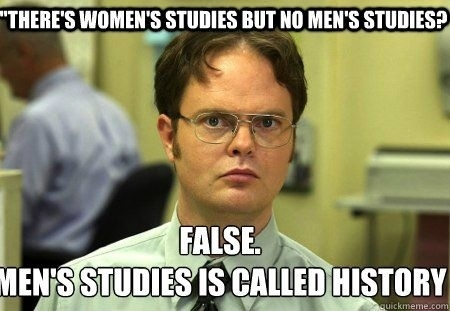
What are your thoughts on this? Can we fairly say that general history courses are to men what women’s studies courses are to women?
The cartoon is still all-too-true. We know that we still do not know about women’s lives to the extent we know about men’s. It is the accomplishments of men (especially in politics and economics, narrowly defined) that have been deemed historically important, the deeds of men (especially in war, industry, and government) that have determined the ways we distinguish one historical period from another (such as pre-Civil War or post-industrial), and the arenas in which men acted (military, legal, etc.) that important things worth recording were said to happen. This leaves out three things: the impact of all of these deeds and events on various groups of women, the stories of women’s lives both within these boundaries (at work, in political office) and beyond them (in the community, participating in street riots, as victims of gender-based violence, as caregivers, raising crops and children, as activists, etc.), and how we might reconceive historical eras (and philosophical schools of thought, etc.) once we read women into them. I’d say that “general history courses are to men what women’s history courses are to women,” rather than “what women’s studies courses are to women,” because we teach much more than women’s history (including the study of masculinity).
Who are some women in your life that have inspired you?
My two daughters amaze me. My colleagues and students in Women’s and Gender Studies amaze me. The women in my neighborhood who keep on keeping on amaze me.
What is your definition of beauty?
That it evolves (I’m not attracted to the same things or people I was 20 years ago, nor do I aspire to the same ideals I did then) and mostly involves appreciation. I like to think my sense of the beautiful only grows as I come to recognize more forms of caring and resilience and to appreciate a wider range of shapes and sizes and colors and textures. On my best days, I see it everywhere, and the more I see it, the more space it takes up, which is wonderful.




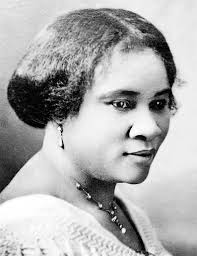

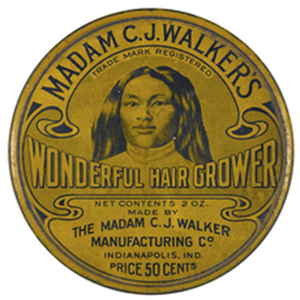
 skinned women with long light colored hair. She conveyed confidence and self-worth in her advertisements, something that was often lacking for women– and especially women of color– at the time.
 In just two years, Madame Walker had nearly one hundred representatives and was making $400.00 a week. She opened the Leila College of Hair Culturists. Women flocked to the college to learn a new profession that would give them pride and independence. Madame Walker left Leila in charge of the business in Pittsburgh, and moved to Indianapolis to spread her products. By 1911, the company was making more than $3,000 a week (about $70,000 in today’s money). For a business run by a black woman, this was almost inconceivable.
 Business League convention in Chicago. She was the richest black woman in America, yet she could not get the attention of the speaker, Booker T Washington. Finally, she stood up and demanded his attention. “Surely you are not going to shut the door in my face,” she said. She told her story. She spoke of cotton fields and the Ku Klux Klan burning schools. She spoke of washtubs and starting her own business. Then she said something no man there had said, “My object in life is not simply to make money for myself, but to use part of what I make to help others.”
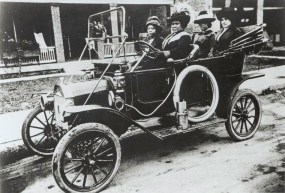 Before she died she said, “I want to live to help my race.”
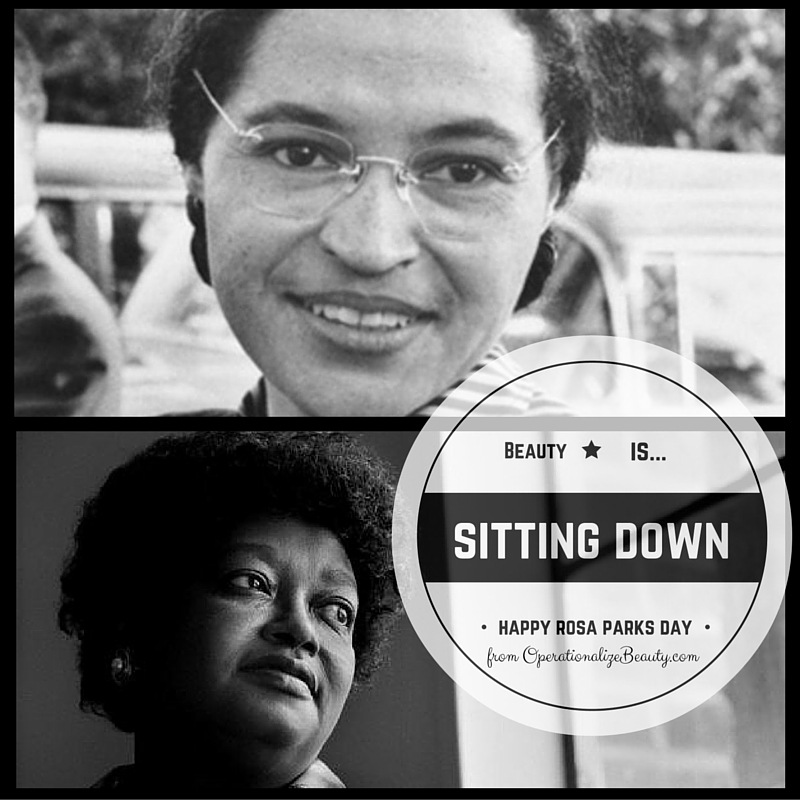
 wide attention to Montgomery Alabama, where transportation segregation was rampant. And legal. What I didn’t realize– and you may not have known either– is that Rosa was sitting in “her” section of the bus. So, she was actually following the law. But when all the seats filled up and a white man was left standing, the bus driver demanded that Rosa give up her seat for him. She refused. And the rest is HERtory.





 OperationalizeBeauty