I recently happened upon this article by Yale grad student Barbara Sostaita. If you were not among the thousands of people who read and shared the article, let me sum up. The picture at the beginning of the post is of a young Latina flipping off the camera– that sets the tone for the entire article. Sostaita writes passionately about her refusal to celebrate “your feminism,” which she (correctly) understands as being overwhelmingly white.
Maybe it was the tone of her writing, or maybe it was the intensity of her passion, but after reading the article I felt deeply ashamed, embarrassed, and left out. I am white. I thought it was a good idea to celebrate the suffragettes. I thought Hillary Clinton was ok to talk about. And Sheryl Sandberg’s Lean In is on my “to-read” list. I did not recognize a lot of the names that Sostaita brought up. I am not familiar with Toni Morrison’s work; I don’t know who Gloria Anzaldua is; I was unaware that female asylum seekers in a Texas detention centers went on a hunger strike for immediate freedom. I didn’t know who these women were, and that embarrassed me.
I felt deliberately left out of this conversation because of the color of my skin. It wasn’t until the next day that it hit me. Maybe I was feeling just a small bit of what my sisters around the country and the world feel every. frickin. day. I was feeling sorry for myself because I felt left out. But how many women are left out of conversations not only because they were born with the ‘wrong’ anatomy, but the ‘wrong’ amount of melanin in their skin as well.
But Sostaita didn’t stop there. She goes on to say:
This Women’s History Month, I refuse to celebrate a white feminism that keeps women of color on the margins. This Women’s History Month, I refuse to celebrate a white feminism that alienates, subjugates and oppresses women of color. I don’t want to be hear about the first Latina [insert public office title] or the first Asian [insert professional sports title]. I’m sick of women of color only being mentioned and deemed worthy when we are the “first,” when we fit neatly into a box crafted by white women’s version of history. We have been, are, and will always be “exceptional” and “important.”
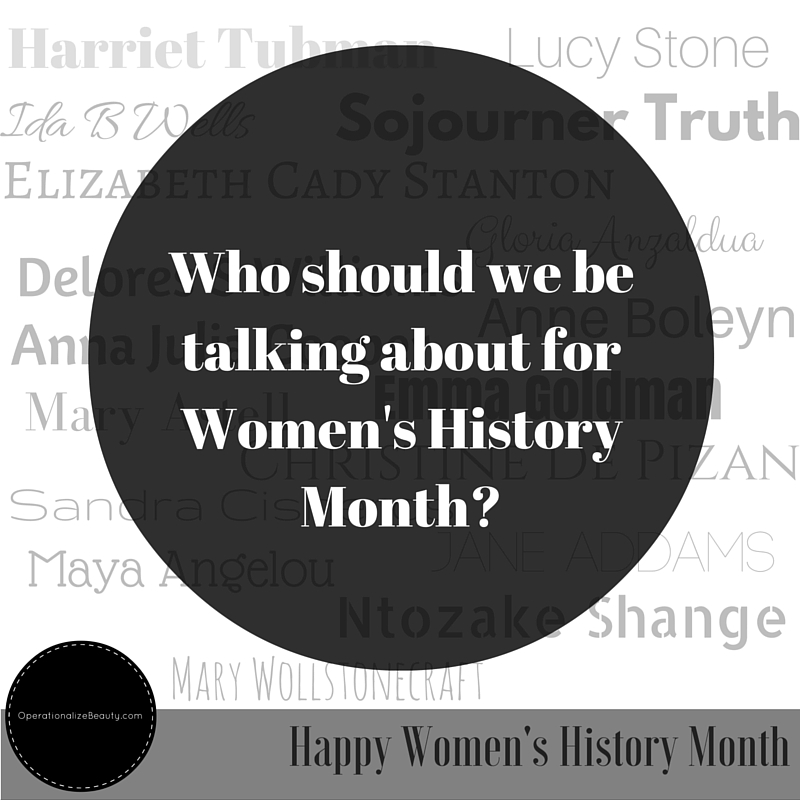
Ms Sostaita got me thinking– who else am I missing this Women’s History Month? Who should we really be talking about? I asked around, and it seems the majority of the women we generally think of when we think of important women in history are indeed white. There are obviously a few exceptions, as some amazing African American women are consistently lauded (I’m looking at you Harriet Tubman and Sojourner Truth).But I was disappointed to see not one Asian, Hispanic, Indian, or Native American woman on my list.
Here are some of the ladies I heard mentioned when I asked, “Who are some of your favorite women from history?”
My mom: for real though, big ups to our mommas!
“If you’re not living on the edge, you are taking up too much space!”
Harriet Tubman: abolitionist, activist, nurse, underground railroad conductor, military hero; buried with military honors at Fort Hill Cemetery in Auburn.
“I freed a thousand slaves. I could have freed a thousand more if only they knew they were slaves.”
Lucy Stone: suffragette, abolitionist; convened the first national Women’s Rights Convention in 1850.
“I think, with never-ending gratitude, that the young women of today do not and can never know at what price their right to free speech and to speak at all in public has been earned.”
Emma Goldman: fiery speaker and advocate for peace, free love, and birth control; she was deported to the Soviet Union in 1919.
“The demand for equal rights in every vocation of life is just and fair; but, after all, the most vital right is the right to love and be loved.”
Anna Julia Cooper: born into slavery, Cooper went on to become an author, speaker, and one of the most prominent African American scholars in US history.
“...not till race, color, sex, and condition are seen as the accidents, and not the substance of life; not till the universal title of humanity to life, liberty, and the pursuit of happiness is conceded to be inalienable to all; not till then is woman’s lesson taught and woman’s cause won–not the white woman’s, nor the black woman’s, nor the red woman’s, but the cause of every man and of every woman who has writhed silently under a mighty wrong…”
Christine de Pizan: born in Italy in 1364, she is considered a pioneering feminist writer and one of the most notable women writers of medieval times.
“[I]f you seek in every way to minimise my firm beliefs by your anti-feminist attacks, please recall that a small dagger or knife point can pierce a great, bulging sack and that a small fly can attack a great lion and speedily put him to flight.”
Sojourner Truth: a leading civil rights and women’s rights activist, Truth was born into slavery, but escaped with her baby girl and went on to successfully win her son’s freedom in court.
“If women want any rights more than they’s got, why don’t they just take them, and not be talking about it.”
Ida B. Wells-Barnett: daughter of slaves, she became a journalist and led an anti-lynching campaign in the 1890s; she formed the National Association of Colored Women in 1896 and is considered a founding member of what would become known as the NAACP.
“The way to right wrongs is to turn the light of truth upon them.”
Elizabeth Cady Stanton:early leader of woman’s rights movement; wrote the Declaration of Sentiments(a call to arms for equality).
“I would have girls regard themselves not as adjectives but as nouns.”
Ashley Rhodes-Courter: a former foster child herself, Ashley advocates for children in foster care
“Your mother is a hard act to follow. She will always be the love of your life.”
Margaret Chase Smith:politician, U.S. congresswoman, presidential candidate, author; she cosponsored the Equal Rights Amendment with Congresswoman Winifred Stanley in the mid-1940s and worked on improving the status of women in the military.
“When people keep telling you that you can’t do a thing, you kind of like to try it.”
Shirley Chisholm:first African-American congresswoman, and first major-party black candidate to make a bid for US presidency
“Tremendous amounts of talent are lost to our society just because that talent wears a skirt.”
Mary Wollstonecraft:English writer, educator, journalist, and women’s rights advocate who argued for equality and educational reforms.
“Taught from infancy that beauty is woman’s sceptre, the mind shapes itself to the body, and roaming round its gilt cage, only seeks to adorn its prison.”
Jane Addams: pioneer for social work, advocate for peace, and social activist; founder of Hull House.
“Action indeed is the sole medium of expression for ethics.”
Mary Astell: English philosopher best known for her theories on the education of women and her critiques of John Norris and John Locke.
“If all men are born free, how is it that all women are born slaves?
This list is far from complete and our conversation is far from over. Let’s come together to educate and lift up. Who would you add to the list?
Did you know March is National Social Worker’s Month? Probably not, because despite the work that these incredible women and men do, their profession is woefully misunderstood and underappreciated.
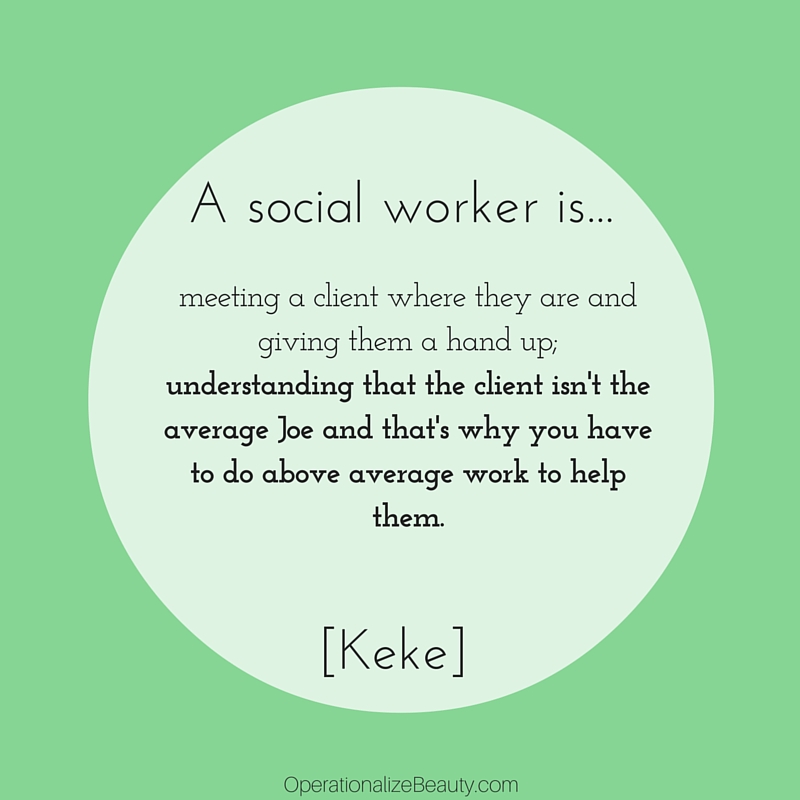
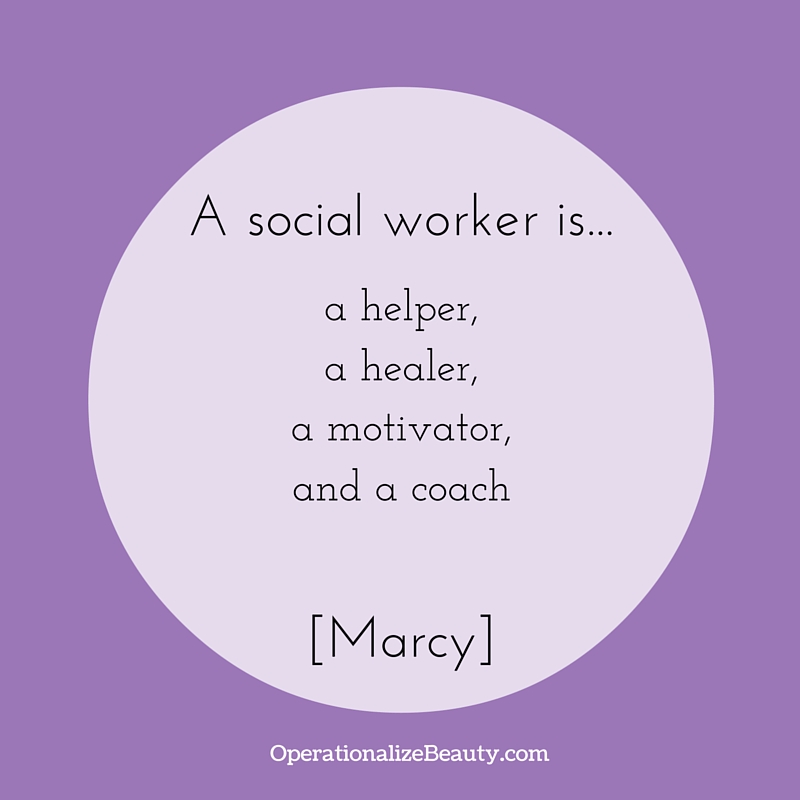
I asked a few of my favorite social workers what a social worker IS and what a social worker IS NOT. Here is what they had to say:
What a social worker is…
What a social worker isn’t…
If you know a social worker please tell them you appreciate what they do, this month and throughout the year.
What is a social worker to you? Let us know in the comments below!
“You want to really, actually learn about peace? Well, get busy doing something for justice…Each of us is called to so something for our neighbors to express our love.”
She has been called an icon, a trailblazer, and a hero. I call her beautiful.
A rough childhood
Sister Ebo was born Elizabeth Louise (she was called Betty Lou) on April 10, 1924. Her mother taught her about God and had her baptized in the Baptist church. Elizabeth’s mom passed away when Elizabeth was just 4 years old, and her father lost his job as a library janitor shortly after. Unable to keep their home in Bloomington, Illinois, Elizabeth’s father put her and her two siblings in McLean County Home for Colored Children. In the home, a boy nicknamed “Bishop” was the first to expose Elizabeth to Catholicism. He wasn’t allowed to openly practice his faith in the home, but that didn’t stop him. One day, he and Elizabeth were sent on an errand to pick up some day old bread. On the way, he slipped into a Catholic church, knelt at the Communion rail, and prayed. Sister Ebo recalls:
He was longing for his church. I cased the joint, and it was beautiful. The sun was shining that day through the stained glass windows and I knew all those stories. I was interested in everything in that church…Bish was explaining while he knelt at the Communion rail about this little house (tabernacle) where Jesus was kept, and that the bread became Jesus during the words in Scripture–that was the difference… I had already joined the Baptist Church and only had Communion the first Sunday of te month, and it was cracker crumbs and grape juice…Communion in the Catholic Church becomes the body and blood of Jesus Christ, and nobody else was telling me that.
It was on that day, at the tender age of 9, that Elizabeth knew she would be Catholic one day.
As a child, Elizabeth battled tuberculosis in her thumb and was in and out of the hospital for treatment. While in the hospital, Elizabeth asked nurse Mary Southwick if a visiting priest could come by her room. The priest and nurse would become a pivotal figures in Elizabeth’s life, teaching her about Catholicism, and later helping her get into Holy Trinity Catholic High School in Bloomington.
The children’s home where Elizabeth had been staying did not welcome her back once she decided to join the Catholic Church. As a result, she was sent to live with a couple of older African-American women, where she stayed until she finished high school. She was the first African American to graduate from her high school.
She recalls her experiences with segregation:
Segregation for us was like going to Woolworth’s and ordering a hamburger. At that time, if you went with a white friend, they would bring it to you on a plate. If you went by yourself, the order was packaged in a brown to-go bag. Known as ‘the brown bag treatment,’ that was to let me know that they didn’t serve colored (people) in that store.
Starting her career
After graduating high school, Elizabeth wanted to attend a Catholic nursing school, but was rejected because of her race. She remembers, “They told me they had never admitted a colored girl before.” School officials didn’t talk to her about her previous studies or her academic capabilities, but rather focused on the color of her skin. It was experiences like this that Sister Ebo remembers as “bruises” that she carried with her throughout life.
She entered the United States Cadet Nurse Corps at St Mary’s Infirmary in 1942. It was a three year program designed to train replacements for volunteer nurses who were serving in the war. She remembers these days and nights as “hectic. Maybe you would get a nap in, and the rest of the time you were either on duty or in a classroom.”
Sister Ebo (far left) is all smiles as one of the first three African American women to enter the Sisters of St Mary in St Louis.
In 1946, Elizabeth was one of the first three African American women to enter the Sisters of St. Mary in St Louis (now the Franciscan Sisters of Mary); she became Sister Mary Antona. In 1962 she earned her degree in medical records administration from St Louis University. In the early 60s Sister Antona served as the assistant administrator of St Mary Infirmary, and she was given the position of Director of Medical Records in 1965. At that time, she was the first black supervisor ever to be in charge of any department at St. Mary’s.
Sister heads to Selma
Sister Antona always listened to her employees, and the Monday morning of March 8th, 1965 was no different. She listened as her employees talked about what had happened in Selma the previous day, on what would become known as Bloody Sunday. She listened as they told her about the protesters who were attempting to march from Selma to Montgomery, Alabama in order to call attention to voting discrimination that was rampant in the area. Marchers were brutally attacked by police, and several were hospitalized. She remembers her first thought as being, “If I wasn’t in this habit, I would be down there with my people.” Little did she know, she would soon have her chance.
Despite her initial gusto, Sister Ebo had her doubts about going to Alabama. Firstly, she was in her 40s and busy running the medical records department at St Mary’s. Besides, she knew how the protesters had been treated on Bloody Sunday, and she had heard about people like Emmet Till, a 14 year old black boy who was murdered in 1955 in Mississippi for reportedly flirting with a white woman. In Selma, a young white minister had been beaten along with the other marchers. She thought if they could do that to him, what would they do to her? She also knew that if she or any of her friends from the St Louis group were arrested, she would be segregated from them in jail. “If they get arrested, they’ll be together. If I get arrested, I’ll be alone.”
What she may not have known was that Selma was the headquarters of the White Citizen’s Council. The council was bent on maintaining white supremacy, but in a more “genteel” fashion than their friends in the Klu Klux Klan. Their unofficial motto was, “Why burn a cross, when you can foreclose a mortgage?”
The tensions in Selma were already high by the time Dr King came on the scene. In fact, marches and demonstrations had been going on since late 1963. So much so, that an injunction was passed in July of 1964 banning mass meetings in churches (generally accepted as the headquarters of the protesters), and public protesting about voting rights. Yep, you read that right. The government in Selma effectively negated their citizens’ right to peaceful assembly. Sheriff Clark and Mayor Smitherman did not budge on enforcing these new laws. When it was publicized that only 300 of the estimated 15,000 adult black population of Selma was registered to vote, a federal court ordered Selma to register 100 voters per day. This did not sit well with many, and black protesters moved their meeting place to nearby Marion. When Jimmy Lee Jackson was shot in Marion, the protests in Slema gained new life. Many thought they should march Jimmy’s body right to the state capital, to show the governor just what was happening in Slema. And so, the idea to march from Selma to Montgomery was born. The first march was led by John Lewis Hosea Williams, and ended at the bottom of Edmund Pettus bridge in what would be remembered as Bloody Sunday.
Sister Ebo had every reason to be scared. She had just voted in St Louis, and part of her felt like what was happening in Selma wasn’t her fight. But Sister Ann Christopher felt differently. She was teaching and living in the black community in St Louis at the time. When she heard about what happened on Bloody Sunday she immediately felt she needed to be there. After Dr King called for clergy to join him in Selma, it was decided that several priests from St Louis would go. Sister Ann asked the father in charge of her parish if she could join them. The priest called Cardinal Ritter, and Ritter answered that not only should Sister Ann accompany the priests, but sisters from each parish in St Louis should be sent as well.
When Sister Ebo’s superior first asked her if she would like to go, she remembers answering, “No, I would not like to go to Selma. I know I do a lot of fussing, but I don’t feel bad enough to want to go down there and be a martyr for somebody’s rights.” But even as she was saying those words, it was “coming into (her) mind that it was bigger than voting rights. It was the right to be self-determining.” In the documentary, Sisters of Selma she says, “It is one thing to have a right on a piece of paper, but if you cannot express that right in the way you live, the way you vote, the way you are self-determining, something has to give.” All the same, Sister Ebo was terrified.
Her fear was soon trumped by her faith. For her, the question of getting involved in social justice is answered in Matthew 25:31-46 when Jesus says, “whatever you did for one of these least brothers of mine, you did for me.” She felt that she had to take a position, and that position had to be based on faith. She felt that, as a Catholic, it was her responsibility to meet her brothers and sisters in Christ, and “realize we all come from the same God.” She felt she had a “responsibility to speak up and become part of the response.” Her response was supported by the Second Vatican Council, who had encouraged sisters to get out of their ivory towers and out of their habits and into the communities they were serving.
With over 50 delegates, the St Louis contingent was the largest to respond to Dr King’s call for religious leaders to come to Selma and join the second attempt to march to Montgomery. Sister Ebo was one of only six nuns, and the only African American woman in the group. The sisters and priests were joined by leaders from various denominations and arrived in Selma on March 10th. When Sister Ebo stepped off the plane in Slema, a priest there thought, “Oh my God. This is going to make a difference.” They met the rest of the marchers at Brown Chapel AME, where crowds parted as minister Andrew Young introduced Sister Ebo and she was seated in a place of honor at the pastor’s chair in the sanctuary. The St Louis group was asked to lead the march that day, with the sisters front and center.
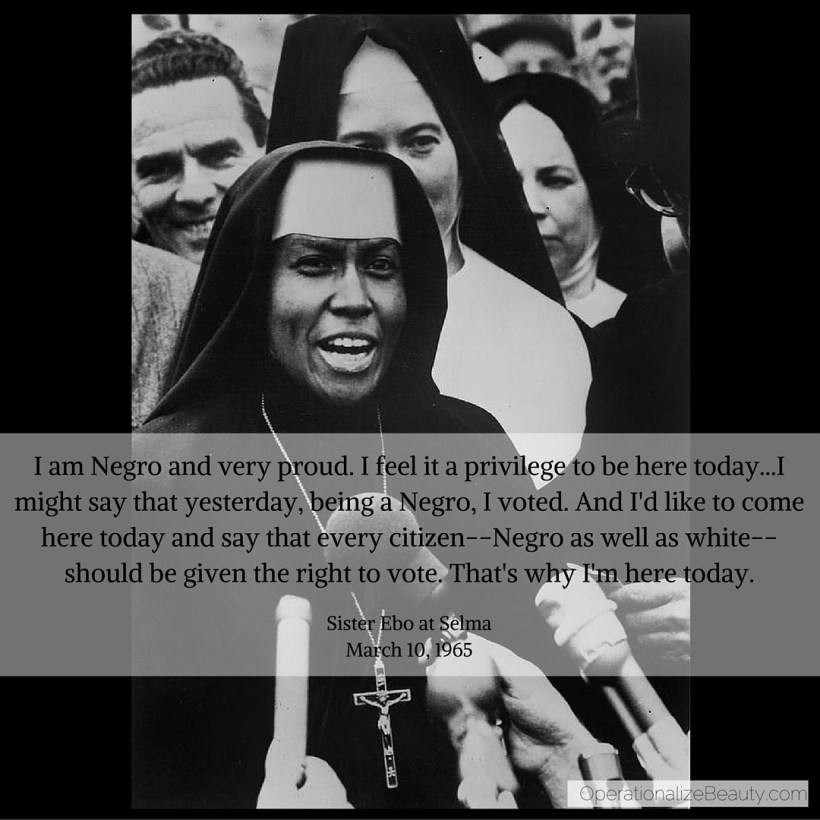
Sister Ebo addresses reporters at Selma
The sisters led the way as the group set out on the second attempt to cross over the Edmund Pettus Bridge on the way to Montgomery. They had men surrounding them, for their own protection. The men were afraid that the crowd would push the sisters forward, and they had their backs. But the group didn’t get far. Contrary to the re-telling of the second march in the movie Slema, Dr King did not lead the group, and the bridge was not opened to them. In fact, the Mayor stopped them before they reached the line of state troopers just ahead. He reminded them of the law against marching in protest and said that he expected that law to be followed. It was then that someone had the idea that the religious leaders should “bear witness” as to why they were marching. And it was then that Sister Ebo became an icon when a broadcaster recorded an exchange between her and local government agents. She told them:
We are here from St Louis to demonstrate and to witness our love to our fellow citizens in Selma. We are here, secondly, to protest the violation of rights. I am Negro and very proud. I feel it a privilege to be here today. I am Sister Mary Antona from St Louis, Missouri, and I stay at St Louis Infirmary. I might say that yesterday, being a Negro, I voted. And I’d like to come here today and say that every citizen–Negro as well as white–should be given the right to vote. That’s why I’m here today.
The entire group then knelt to say the Our Father, and made their way back to the church. Their march was short, but their impact was immense.
Finally, a federal court order was issued to allow the march, and President LB Johnson pledged his support. National Guard troops as well as U.S. Army troops protected the marchers on their four day journey to Montgomery.
It would be another 40 years before Sister Ebo would fulfill her desire to cross the famed Edmund Pettus Bridge that spanned the Alabama river and led to Montgomery.
Sister Ebo finally crossing the Edmund Pettis Bridge
The image of Sister Ebo marching in Slema that day would become an icon. She remembers:
It turned out that the habit was what got everyone’s attention very quickly, because nuns had not been seen doing anything like that before. It didn’t ring a bell with me that we were getting involved in something hysterical and historical.
There is no doubt Sister Ebo is glad she went. She has said, “The one thing I didn’t want to do was to become a sweet little old nun that was passing out holy cards and telling people ‘I’ll pray for you’ and not really having mastered or developed an expertise in being a caregiver from a good theological base.” And develop an expertise she did…
Life after Selma
When she returned home to St Louis, Sister Ebo picked up right where she left off, but seemed to do so with even more gusto.
In 1968 she helped found the National Black Sisters’ Conference (she would later serve as President).
She earned her Master’s degree in hospital executive development from St Louis University in 1970.
In 1976 she was appointed as the executive director of the St Clare Hospital in Baraboo, Wisconsin. She was the first African American woman religious to head any Catholic Hospital in the nation.
After some health problems of her own, she decided she wanted to stop paper-pushing, so she got her second Master’s degree, this time in theology of health care in 1978 from Aquinas Institute of Theology and began serving as hospital chaplain. In a 1978 article in the Catholic Herald Citizen, she compared her position as chaplain to that of a clown, “Clowns don’t do a lot of talking. They’re quiet. they bring happiness by smiling in a way that is both happy and sad. It’s a wry smile that says, “I’ve experienced life– both the gladness and the sadness. I’m human just like you.“
In 1989 the National Black Sisters’ Conference presented her with the Harriet Tubman Award, and described her as being “called to be a Moses to the people.”
In 2000, at the 35th anniversary of what came to be known as the “Right to Vote” Bridge Crossing, she was honored with the Living Legend Award by the Voting Rights Institute in Selma.
In 2002 she received the Distinguished Humanitarian Award from the Dr Martin Luther King Jr State Celebration Commission of Missouri.
She was honored as the Lifetime Achiever in Health Care by the St Louis American Foundation at their 12th annual Salute to Excellence in Health Care Awards in 2012.
Additionally, she has been the recipient of six honorary doctorate degrees from the following Universities:
Loyola University-Chicago (1995)
College of New Rochelle of New York (2008)
Aquinas Institute (2009)
St Louis University (2010)
University of Missouri St Louis (2010)
University of Notre Dame
Sister Ebo receiving her honorary doctorate from Notre Dame
She has continued to speak out for voting rights of not only African Americans, but all Americans
There is a concerted effort to suppress the votes of the poor and blacks. The effort was made during the last election to make sure we didn’t have people standing all the way around the block, just to get the right to vote, but it is still happening in individual states.
She has also been vocal about present-day racism and injustice that is seen in substandard educational opportunities for minorities and recent shootings of unarmed black youth. A friend drove Sister Ebo through Ferguson shortly after the shooting death of Michael Brown, and when he stopped to talk to some law enforcement officials that he knew, word soon spread as to who he was escorting around. The head of security in Ferguson, Capt. Ron Johnson of Missouri Highway Patrol visited Sister Ebo first, and several soon followed suit. A small video crew from Birmingham Alabama had walked past the car, not realizing that the living legend was inside. Capt Johnson stopped them and told them they were going the wrong way– they should be talking to that beautiful black nun. Sister Ebo told the crew to not be satisfied by taking some superficial pictures. “You are going to raise the rug and look at what’s under the rug. The mistake I think many of is made in the 60s is we were taking somebody else’s word for it; you have to look under the rug.”
Sister Ebo with Captain Ron Johnson
She was present at a Faith in Ferguson prayer service in March of 2015, where she urged people on both sides of the conflict to meet for dialogue. She noted that dialogue between races and cultures creates understanding and builds bridges. She challenged the congregation: “You want to really, actually learn about peace? Well, get busy doing something for justice…Each of us is called to so something for our neighbors to express our love.” In the words of Pope Paul VI: “If you really want peace, work for justice”
Sister Ebo told the group in Ferguson that “every 20 years or so, we go through a new discontent.” She recognizes that there are many human rights issues to deal with today, and encourages people to ask themselves, “What do I need to be responding to?”
Sister Ebo has done her fair share of responding. Though not a native to St Louis, we will claim her as our very own beautiful black nun. Our very own civil rights hero. And our very own responder.
March 8th is International Women’s Day, a “global day celebrating the social, economic, cultural and political achievements of women. The day also marks a call to action for accelerating gender parity.” (according to InternationalWomensDay.com). Woman’s Day was organized by the Socialist Party of America, and was first observed in New York in 1909. Though it was claimed to have been organized as a remembrance of the 1908 strike of the International Ladies’ Garment Worker’s Union, there doesn’t seem to be much evidence of that strike actually happening. Inspired by the Americans, over one million people celebrated Woman’s Day throughout Austria, Denmark, Germany, and Switzerland in 1911. The popularity of the Day continued to spread, and in 1977 the United Nations General Assembly invited member states to proclaim March 8th as the UN Day for Women’s Rights and World Peace.
This year’s campaign theme is built around the easy to share #PledgeForParity. According to a 2014 prediction made by the World Economic Forum, global gender parity will not be achieved until 2095. 2095, y’all! But that is not the worst of it. The very next year the very same group re-evaluated the numbers and, given that progress towards gender equality had SLOWED, they extended estimate to 2133. So, they are saying that women will not have equal rights, education, and representation for another ONE HUNDRED AND SEVENTEEN years! I won’t see it, I get that. But I am not ok with the idea that my daughters won’t even see it. In response to this abysmal estimation, people are being asked to take a pledge to take concrete steps to close the gender gap before the estimated date. Some suggestions are to pledge to:
help women and girls achieve their ambitions
challenge conscious and unconscious bias
call for gender-balanced leadership
value men and women’s contributions equally
create inclusive, flexible cultures
Tons of people have already make pledges, including the Global President of Mars Foods Fiona Dawson and Founder of Virgin Sir Richard Branson.
“It’s sad to see that in this day and age, gender parity is still far from a reality in many parts of the world.
I’ve always felt strongly that the best places to work are those that foster an inclusive culture – one where differences are celebrated and our people can be themselves and feel at home.
Here at Virgin, we recognise that a culture that brings together the right group of people who mirror the wonderful diversity of our world and who can promote diversity of thought is good for business. It’s a huge opportunity, not a challenge, and it’s great for the communities that we serve. We have the desire to make a positive difference to people’s lives through changing business for good, so we create an environment where all people can thrive – because of who they are, not in spite of it.
That’s why, on International Women’s Day, I support the Pledge for Parity. It’s an important reminder that all of us in business can and must do so much more to promote equality, respect and fairness.”
How will you help bring an end to gender disparity? Pledge here.
In January Emma Watson started a virtual feminist book club. And it is kind of a big deal. With over 100,000 members, it is undoubtedly the largest group on Goodreads. So far the group has explored Gloria Steinem’s My Life on the Road (in January) and Alice Walker’s The Color Purple (February’s book). For those of you who are curious, but just don’t have the time, here is a synopsis of what is happening in the club:
In January Emma Watson started a virtual feminist book club. And it is kind of a big deal. With over 100,000 members, it is undoubtedly the largest group on Goodreads. So far the group has explored Gloria Steinem’s My Life on the Road (in January) and Alice Walker’s The Color Purple (February’s book). For those of you who are curious, but just don’t have the time, here is a synopsis of what is happening in the club:
The Discussion Topics range from the super popular and super broad “Finished the Book” to the virtually ignored “Shrinking Evil.” There are a few of my favorite threads:
The book for February was The Color Purple
Discussion Topic: Finished the Book
The most popular discussion is “Finished the Book” which was started by over-achiever Amy, who read the entire book in one night and opened up a thread for other speed readers to discuss their thoughts without having to worry about us slow-pokes getting upset about spoilers. Most commenters loved the format of the book, and pretty much everyone struggled at first with the dialect in which the book is written, but got used to it. One commenter mentioned that the subject matter, especially in the beginning, was like a “punch in the face.” I have to agree. I had no idea what I was getting into, and the first couple of pages had me reeling. I was hooked, though, by what another commenter described as a “horrific and beautiful” novel.
Discussion Topic: Book vs Film
This discussion opens with a link to a review of the film adaptation of The Color Purple. Apparently when the movie was released in 1985, there was a backlash from males in the black community who resented that the film depicted them in a negative light. Commenters in this thread largely found that to be a bit short-sighted and thought such views kind of missed the point of the book/movie. As commenter Jackie put it, “I’ve always read it as the story of an undereducated, abused woman coming into her own with the help of other strong and supportive women.” And group member Iluminada agrees, “To me, it seemed the book was trying to convey the loss in a man’s life, white or black, when he can’t see women as human beings.”
The thread goes on to discuss some of the differences, good bad or indifferent, between the book and the movie:
The relationship between Shug and Celie: though some thought it was not as well portrayed in the movie as it was in the book, commenter Jackie argued, “I actually thought that the Celie/Shug relationship and the Celie/Nettie Relationships were the only ones that transferred well in the film.”
The character of Mary Agnes/Squeak is not explored enough in the film.
The redemption of Mr ____ is left out of the movie version.
The time sequence (sooooo many readers had an issue with the time sequence) is different in the film.
Shug singing is a powerful addition to the movie that we were not able to get in the book.
Another important point that this thread brought up was the incredible jobs Oprah Winfrey, Whoopi Goldberg, and Danny Glover did in the film. Group member Kressel noted, “Wow. IMBD says 11 nominations and not one win. It makes me think differently about the boycott on the Oscars this year, which I was skeptical about until now.” This is just one of the ways that this book seems to transcend time (more about that below).
Discussion Thread: Indifference
This thread was largely and woefully overlooked. It touched on the indifference that the native tribe in Africa, the Olinka, had towards missionaries in the book. Though the thread was started out of what seems to be a super personal experience, I think it touched on a very important issue. As one group moderator noted: “Missionaries are often unwelcome, and native populations are under no obligation to welcome their teachings.” The Color Purple touches on so frickin’ many issues it is unreal. And, as I mentioned above, it completely transcends time as every issue is still being discussed today.
I hadn’t given much thought to missionaries until I was an Anthropology minor in college. Let me be clear that I am speaking to religious missions, not humanitarian aid. The two are very different, though I know that modern missionaries have endeavored to meet both the physical and spiritual needs of the people they are traveling so far to help. The problem for me is the underlying idea that these people need spiritual help in the first place. Generally, a missionary’s understanding is that the group to whom they are proselytizing have an inherently WRONG understanding of the world and must therefore be saved. Missionaries tend to go into their mission field with the understanding that their own story is correct and worth sharing, while the stories of the people whose homes they are entering is wrong and needs to be changed. This is tragic to me because it misses the beauty and richness that has lived and thrived in the native culture. The so-obvious-it-really-shouldn’t-need-to-be-said-but-I-will-say-it-anyway exception to this is any tradition or custom that infringes on basic human rights, like child brides and female genital mutilation. That shiz needs to be changed.
Discussion Thread: Other Aspects of the Book
Being a feminist book club, this thread was started in order to touch on other issues (besides the growth and empowerment of the female characters) the book brings up, like colonialism/missionaries and sexuality. These issues are what make Purple so timeless. The book was written in the 1980s, but these issues are nowhere near outdated. Some issues that were not mentioned in this thread, but are also vital to the book are the concept of faith (this is touched on in another thread, though) and how the image of god changes through the course of the book, and the human relationship factor– the growth of each individual character and how that personal “coming of age” impacts the relationships the characters foster.
This is my first time being involved in a book club of any sort, and I have absolutely loved it so far. A couple of things I especially love about this group is the sense of community that has already grown within it. For example, last month the book was VERY difficult to get a hold of. For some, it was a money thing– $16 for the e-book just wasn’t in the budget. For others, the book was simply not yet available in their part of the world or in their language. One member responded by putting the entire book on her OneDrive and then sharing it with the whole group!
Another awesome thing that is happening is meet-ups. From Belgium to Los Angeles folks are getting together and talking about these books, which I think is pretty darn cool.
I also love the diversity of this group. There are entire discussion boards in Spanish and French. I just wish I spoke those languages!
And one more thing I love about the group– Emma has been great about interacting with authors. Shortly after we started reading Gloria Steinem’s book, she announced that she was going to have the pleasure of interviewing the author at an event in London and opened up a discussion thread for members to suggest questions for Ms Steinem. For The Color Purple, Emma talked to Alice Walker over the phone and shared some insights from the author herself. And Emma just announced the book for March, All About Love: New Visions by bell hooks. Again, Emma has a connection with bell, as bell recently interviewed Emma for Paper Magazine.
I love that this group is a thing. And I love that I get to share it with you!
Frankie Muse Freeman will be celebrating her 100th birthday this November. She could be sitting at home, resting on the laurels of her innumerable accomplishments. But that’s not how she rolls. Instead, she is speaking out about the progress we have made as a nation in the area of civil rights, and what we can continue to do moving forward.
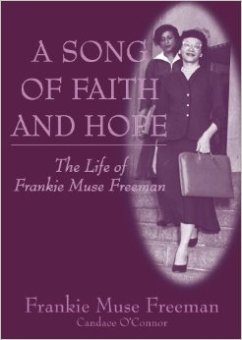
I read her book, A Song of Faith and Hope. I saw her speak at a local library event. And I was honored to speak with her over the phone. Here are just a few lessons I have learned from Mrs. Freeman.
Mrs Freeman’s book. Don’t read it unless you want to be super inspired. (Image from Amazon.com)
1. Just do it.
Growing up, Frankie always heard people say they were “fixin'” to do this or that. Her parents didn’t love that. Instead, they encouraged Frankie and her siblings to get on with it– don’t “fix” to do it, just do it! (I think Yoda would have approved)
Frankie carried this simple yet powerful message with her throughout her life. I can’t help but think that many of her accomplishments are largely due to this mantra– this drive to just keep DOing.
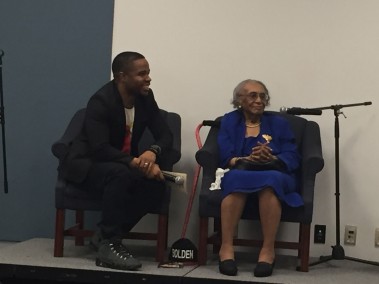
Mrs Frankie Muse Freeman being escorted in to St Louis County Library Author Event featuring Mrs Freeman and Mr Koran Bolden.
At the last event at which she spoke (pictured above), Mrs Freeman was introduced as being the first African American woman to serve on the U.S. Commission on Civil Rights. When it was her turn to speak, she corrected the mistress of ceremonies: “I was not the first African American woman to serve on the Commission. I was the first woman period. Black, white, yellow, blue, or otherwise,” to which she received thunderous applause.
Mrs Freeman with her colleagues from the US Commission on Civil Rights in 1966.
The list of Mrs. Freeman’s accomplishments is staggering. Not only was she a rock star of a civil rights attorney, winning a landmark victory that ended racial segregation in public housing in St Louis, she went on to serve on the very housing commission she had just defeated in court, to help them implement the changes she demanded. As mentioned above, she was the first woman to serve on the Civil Rights Commission, and went on to become Inspector General for the Community Services Administration (these are positions appointed by the President of the United frickin States, y’all). The number of hats she has worn is staggering– from being the national president of her sorority to serving on just about every board known to man, including (but nowhere limited to): the League of Women Voters, the National Council on Aging, the YWCA, the Girl Scout Council of St Louis, the St Louis Urban League, the National Council of Negro Women, the World Affairs Council of St Louis, oh, and the African American Jewish Task Force (no, she’s not Jewish, she just thinks its cool to reach out across cultural and religious boundaries). Now, with a resume like this, you might be thinking, “Oh, she’s had a great life.” You might even call it ‘charmed.’ You would be wrong.
Loss has not been a stranger to Mrs. Freeman. She has buried her mother, her father, and her husband. But she has also buried her son– a grief no human should have to endure. And she has battled cancer–twice– and won.
Mrs Freeman’s husband, Shelby, with their son.
She has also fought one hell of a battle professionally. In her book she recalls one particular instance in Alabama, where she and the Civil Rights Commission were conducting hearings focusing on economic rights in Montgomery. In her words:
One evening, after the Montgomery hearings, I returned to my motel room after dinner. It was a pretty evening in April and I had the curtains open; I could look out– and anyone who wanted to could look in. I was sitting at a table with a member of the Alabama State Advisory Committee, reviewing the day, when boom, something struck the window and broke it. I thought it was a bullet. It apparently was intended for me, but I was not hit.
She was also fired, at least twice, for speaking up and being a “trouble maker.” But you think a little death, cancer, and possibly a bullet is going to stop Frankie?! She could have given up and not one person would have blamed her or said she hadn’t done enough. But nope. She just. Kept. Moving. As she says in her book, you have to keep your hand on the plow.
Even today, Frankie is a do-er. At the aforementioned speaking event, she was joined by youth activist and motivational speaker Koran Bolden. When asked about entities working to keep people divided, Koran spoke powerfully about how and why today’s youth needs our support. Frankie was so moved she jumped in and said, “What you just said touched everybody here, so there is no reason they can’t start tonight.” She went on to encourage everyone in the room to support Mr Bolden’s mission, saying, “Don’t wait until tomorrow for something that can start tonight. It is an individual’s responsibility to bring about change. Let’s begin it and let’s get on with it.” I have a feeling that Mrs Freeman has rarely waited for tomorrow.
Freeman and Bolden at St Louis County Library Headquarters
Is there anything more beautiful than a woman who doesn’t say she’s “going to” do this or that, but actually goes out there and does it?
2. You are powerful.
Mrs. Freeman grew up in Danville, Virginia, the last capital of the Confederacy. She and her family lived on the 200 block of Ross Street, where all of her neighbors were black. The 100 block of Ross Street was a white neighborhood, and young Frankie and her siblings would walk through that neighborhood on their way into town. Mrs Freeman remembers that white children playing outside would often smile and say “nigger, nigger, nigger” and she and her siblings would smile back and say “cracker, cracker, cracker.” When the Freemans needed their shoes repaired, they would take them to a shop in the basement of Mr Wrigley, a white man. When the shoes were ready, Mr Wrigley’s children would return them to the Freeman family. These were normal occurrences.
Baby Frankie
Peaceful though it was, little Frankie grew up knowing that people who looked like her were treated differently, and that was not ok. She also grew up knowing that she had the power to change it. Her parents taught her that if you stand for something, there will be times when you have to say, “Enough”– but that doesn’t always mean you make a scene right then and there. She was always encouraged to do something that would be effective. Public transportation was segregated in Danville, so the Freeman family simply walked everywhere they went. If a friend of the family was mistreated in the local department store, the Freeman’s would no longer shop there. Frankie’s parents, Maude and William, were very active in Danville so Frankie grew up seeing her parents making a positive impact their community, and she knew she could too.
3. Make your own path
When the black community in Danville could not get a loan from the white owned banks, Frankie’s relatives started their own bank.
After graduating from law school, Frankie applied to law firms in St Louis. She was told they could use her in the office, perhaps to do research, but they would not hire her to try cases. Following her relatives’ lead, she started her own practice. She met with judges in St Louis and tried the cases no one wanted. The first few times she showed up to the courthouse and told the clerk which case she was there for, she was told to have a seat and her lawyer would be there shortly. But it wouldn’t be long before they learned who Frankie Freeman was. (By the way, Mrs Freeman practiced law until 2009. That’s 62 years!)
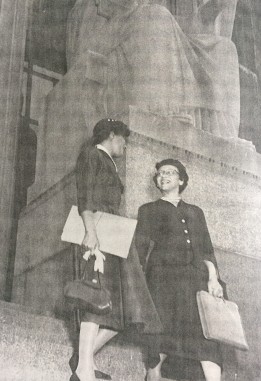
Frankie with NAACP attorney Constance Baker on the steps of the St Louis Federal Courthouse. Frankie was arguing Davis et al v the St Louis Housing Authority, the case that ended segregation in housing in St Louis.
4. You do not acquiesce.
Throughout her book, this mantra “Later for you” pops up again and again. I loved seeing it every time because I knew it was a promise, and I knew whatever the situation was, Frankie was going to make it right. Like at a restaurant in Flat River, Missouri. Or a coffee shop in Louisville. Here is how she explains it:
Sometimes when you beat your head against a brick wall, you have to realize that you are damaging your head, not hurting the wall. Therefore, you do the best you can so long as you do not acquiesce and you do not give up. You say, “later for you,” and promise yourself that when you can do something about it, you will.
There were times when Mrs Freeman chose to give in to the law of the time, in lieu of being arrested. She knew she could do more in the courtroom than she could in the jailhouse, so she promised, “later for you” then got to work changing the world. (More on that below).
When I spoke to Mrs Freeman, I asked her what she sees today that makes her think, “Later for you” — what do we still need to work on? Living in St Louis, I was expecting a comment on the police violence that we have been hearing so much about. But she surprised me when she said that every state in America still has segregated schools. “Not by law, of course, but it is true.” She told me that there is still racial segregation, or isolation, in public schools today. And I don’t have to look farther than my own childrens’ school to see that she is right. We live in a suburb of St Louis, and the majority of the students are white. In fact, the few African American students we do have are those who are bussed in from the city. Frankie laments that diversity is not yet as valued as it should be. She is saddened to think that children don’t have the chance to really play and interact with kids who look different from them until they are adults. She encourages working with teachers and parents alike to figure out a solution. She told me that she called for more diversity and spoke about the value of it in 1969, and can say the exact same thing now. As she said in her book, “To move away from racism, I feel we need to get to know one another.” And getting to know each other should start happening at a young age.
5. Speak. Up.
Frankie didn’t always say “Later for you” to herself. As a matter of fact, she spoke right up when she found herself in a situation she knew was unfair, unethical, and unconstitutional. For instance, in February of 1961, Frankie was making her way via bus to Hayti, Missouri to be the keynote speaker at an event held by her sorority, Delta Sigma Theta. On the way, the bus stopped at a restaurant in Flat Creek. She got off the bus with the other passengers and made her way to the restrooms. A waitress loudly informed her that “The colored use another entrance.” When Frakie proceeded towards the ladies room anyway, a white customer blocked her path and repeated what the waitress had just said, “Colored can’t come in here. You have to go to the other side.” Frankie froze. The bus driver got involved and defended the restaurant’s policy. Frankie thought about pushing the lady out of the way– but what would that solve? Frankie would have been arrested and her sisters in Hayti would have no speaker for their event. Instead, Frankie headed back to the bus and re-wrote her speech. (This might sound like Frankie gave up, but stay with me).
At the next stop, Frankie called home and asked her husband to contact a friend of theirs, attorney Charles Oldham. She wanted to file a complaint against Greyhound and against the restaurant, and file a complaint she did. Greyhound soon issued an apology and the restaurant agreed to change its policy. Two weeks later, when some folks visited the restaurant to make sure they had carried out their promise, they found that the separate facility for “colored” had been eliminated.
She had a similar incident at a coffee shop in an airport in Louisville. She was denied service, she spoke up, and changes were made. Mrs Freeman was confident enough to stand up because she knew she had the Constitution on her side.
6. Stay humble.
In her book, Frankie tells the story of when she was nominated as president of her Sorority. Now, let me point out that Frankie did not join while she was in college. She had known about Delta Sigma Theta when she was an undergrad at Hampton Institute, but they did not have sororities on campus then. And while studying law at Howard, she had no time to join. So it wasn’t until after she had received her law degree and was living in St Louis that Frankie became involved in the nationally known public service sorority. She worked hard for the sorority, and in 1967 she was on the ballot for national president. Now, the results of the election were to be announced at a banquet on the third day of a national convention. But word got out that Frankie had won, and she was receiving congratulatory phone calls while she was trying to get ready for the banquet. Consequently, she was late. In her own words:
I was late, honestly late; I am never late, but I truly was that time. However, some people thought I was coming in late on purpose–that I knew I was elected and was trying to make an appearance. Jeanne Nobel teased me later that I had “flaunted in,” but I replied that “I don’t flaunt.”
When you have lived the life Frankie Freeman has lived, you don’t have to flaunt.
While I was talking to Mrs Freeman on the phone I confessed that I had been holding onto her phone number for a couple of weeks, but I hadn’t had the courage to call her. I told her I was a bit intimidated because she is such a big deal. She just laughed and said, “Oh, I am not a big deal. I am a 99 year old woman!”
Well, that didn’t convince me. Frankie is most certainly a big deal, and she has every reason to flaunt. But she stays humble, and that is beautiful.
With First Lady Nancy Reagan
With First Lady Barbara Bush
With President Jimmy Carter
With President George H W Bush
With First Lady Ladybird Johnson
With President Bill Clinton
(See, I told you she was a big deal)
7. Do your homework.
Frankie’s parents, Maude and William Muse
Frankie’s mother was a public school teacher, and though she gave up her career to stay home with her children, she never stopped teaching. The Muses were strong believers in the power of education, and told her children that once they got an education, no one could take it away from them. Maude knew her children would go to college, the only question was where. She and William paid for their own children’s education, but Maude went even further and raised scholarship funds so other children could pursue their education as well.
Frankie remembers that her parents– her mother especially–filled their home with books. When I spoke with her, Frankie recalled: “There were books all over the place– and we had to read them all!” But she didn’t mind. She loved reading anything she could get her hands on.
When I asked her what the best piece of advice she had received was, she paused for a long moment and really thought about it. She finally answered, “My teacher told me to do my homework. That was the best advice.” And I can see that throughout her life, Frankie did just that. She worked hard, both in school and in the courtroom, and brought about real change in her community and her nation. That’s pretty damn beautiful if you ask me.
8. Take care of yourself.
Looking at Frankie’s life, it is easy to get the impression that she was all-business. How else could she have accomplished everything that she did? That is why I love this story of her just throwing caution to the wind and doing something unexpected: After being fired (the first time), Frankie went out and treated herself to something she had always wanted– a full length mink coat (don’t tell PETA). She put it on her husband’s credit card, but told him not to worry, she would pay it off as soon as she got back to work. Which, was like, the next day.
When I talked to her on the phone, I brought up some things she had mentioned in her book that had brought her joy. One of these things was cooking. I could hear her smile through the phone when she explained that, especially in the beginning, she was working so hard to get her career going, that she had to take time to relax, and cooking helped her do that. She told me her favorite thing to cook is her famous corn pudding, or her veggie salad with marinated green peppers, celery, tomatoes, and whatever other vegetables she can find. (My mouth is watering).
There is no arguing that Mrs Freeman worked hard throughout her life, but she knew how to treat herself as well. And that is beautiful.
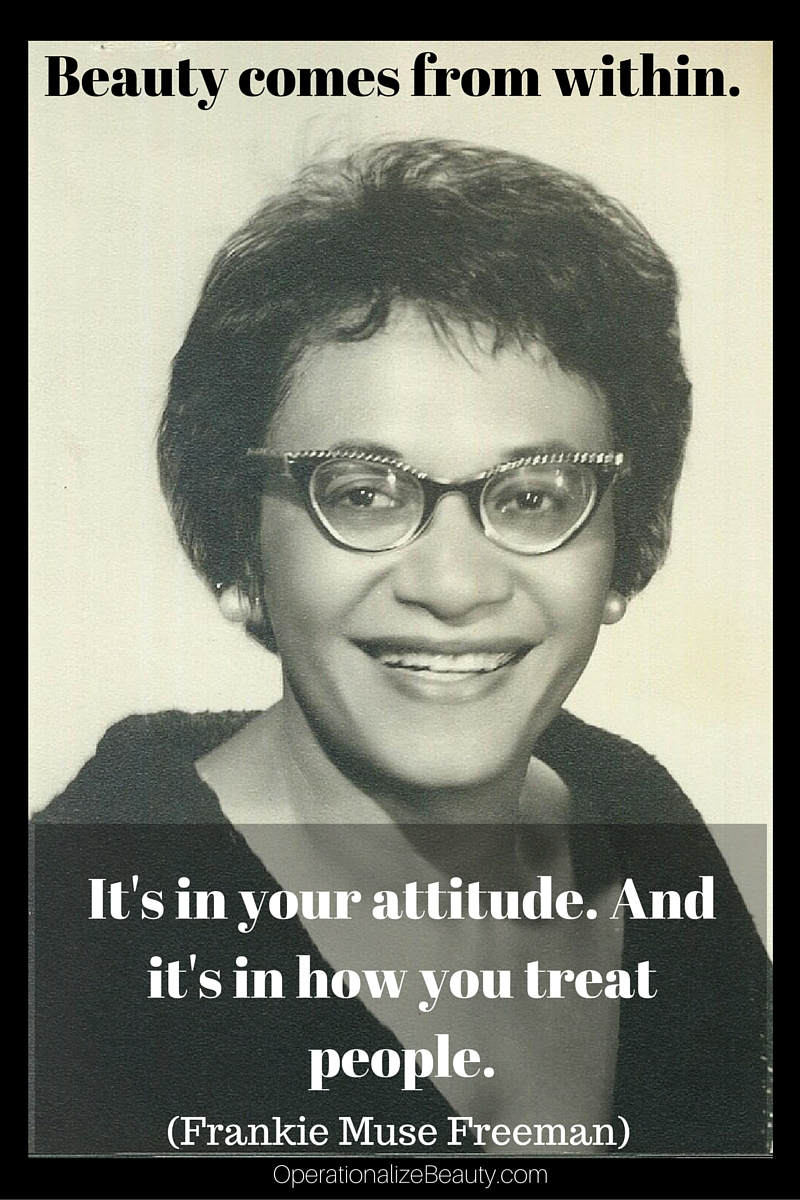
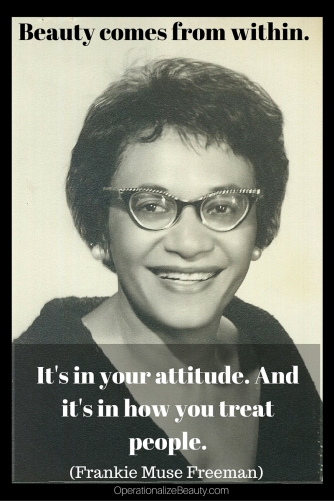
At the end of my conversation with Mrs Freeman, I asked her what her definition of beauty is:
Image from HistoryHappensHere.com
I was honored and inspired to have to opportunity to not only see this beautiful woman in person, but speak with her personally. She is truly an inspiration, and an example of what one individual can accomplish if they would just get to it.
Unless otherwise noted, all information and images were taken from Mrs Freeman’s book, her speaking engagement at the St Louis County Library Headquarters, or from my personal interview with her.
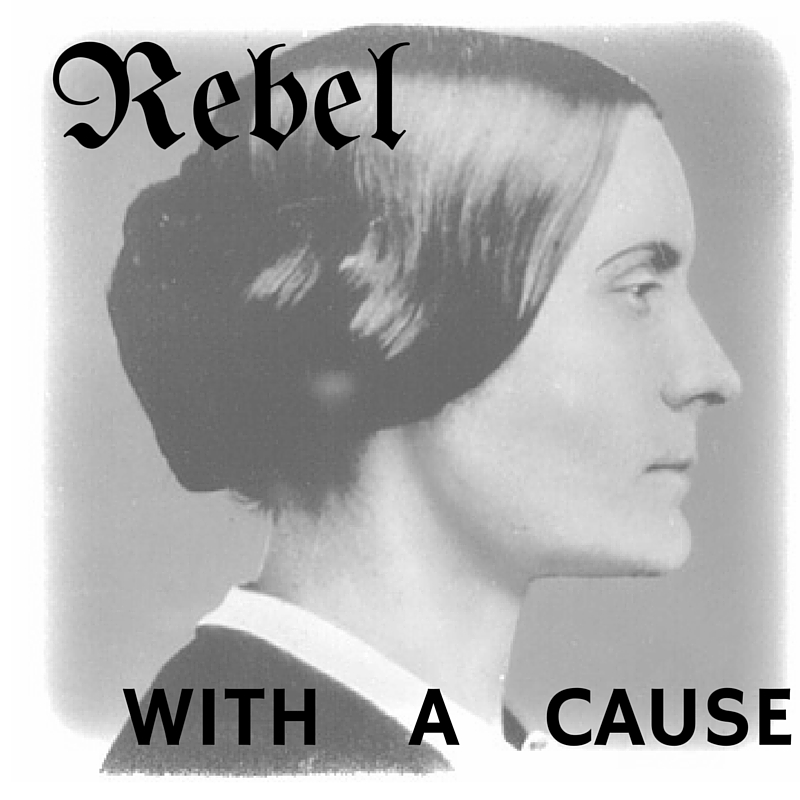
As you probably know, today is President’s Day. As you may or may not know, today is also Susan B Anthony’s birthday. Here are a few things I learned from scratching the surface of her life story…
As you probably know, today is President’s Day. As you may or may not know, today is also Susan B Anthony’s birthday. Here are a few things I learned from scratching the surface of her life story…
1. To be a rebel, you gotta find a cause. Or six.
Throughout her life, Anthony fought for equality above all else.
Abolitionist: Members of Anthony’s family were very involved in the anti-slavery movement, and in 1856 Susan became an agent for the American Anti-Slavery Society. She hung posters and gave speeches calling for an end to slavery. In 1863 Anthony and Elizabeth Cady Stanton organized a Women’s National League to support the 13th Amendment. In her newspaper, The Revolution, she argued against lynchings and racial prejudice.
Educational Reform: In 1846 Anthony was a teacher and became active in calling for equality in the classroom. She called for better pay for women teachers and for equal education opportunities for all students, regardless of race, gender, or their family’s former state of servitude. In the 1890s, she raised $50,000 to ensure that the University of Rochester would admit female students.
Labor Activist: Anthony advocated for an eight-hour work day in her newspaper, and she encouraged women who were excluded from male dominated trade unions to form their own unions. And of course, she called for equal pay for equal work.
Temperance Worker: Anthony was raised a Quaker, and as such, she believed drinking alcohol was sinful. She was an active member of the Daughters of Temperance, a group of women who drew attention to the effects of drunkenness on families and pushed for stronger liquor laws. When she was denied the right to speak at a convention of the Sons of Temperance, she held a meeting of her own. In 1853 Anthony and Elizabeth Cady Stanton endeavored to petition the State Legislature to pass a law limiting the sale of liquor. The petition was rejected because most of the 28,000 signatures on it were from women. Anthony and Stanton realized that women needed the vote so that politicians would listen to them, and they resigned from the Temperance Society to focus on getting women the right to vote.
Suffragist: Anthony and Stanton had believed that the Republicans would reward women for their work in the abolition movement by giving them the right to vote. When that didn’t happen, they were disappointed. Then they got to work. They founded the American Equal Rights Association and began publishing their newspaper, The Revolution. Anthony toured the west, giving speeches and raising awareness. She gathered petitions with thousands of signatures and spoke in front of every Congress from 1869 to 1906 to ask for passage of a suffrage amendment. She was a leader in the suffrage movement until she retired as president of the National American Women Suffrage Association in 1900 (she was 80 years old). However, she was still an active and respected voice in the movement. She presided over the International Council of Women in Berlin in 1904 and became honorary president of Carrie Chapman Catt’s International Women Suffrage Alliance. Women finally got the vote when Congress passed the Ninteenth Amendment (also known as the Susan B Anthony Amendment) in 1920, fourteen years after Anthony’s death.
2. Haters gonna hate.
For just about every cause she championed, somebody hated on her:
She faced mobs, threats, and was even hung in effigy for her efforts to end slavery.
Ironically, Anthony’s work for women in labor got her labeled as an “enemy of labor.” She was president of the Workingwomen’s Central Association, which drew up reports on working conditions and provided educational opportunities for working women. She supported the Sewing Machine Operators Union and the newly formed women’s typesetters union. She tried to establish trade schools for women printers. When printers went on strike in New York, saw it as an opportunity for employers to see that women could do the job just as well as men could and therefore deserved equal pay for their work. So, she encouraged employers to hire women to take the place of the strikers, and was accused of strike-breaking and being an enemy of labor.
Injustice was served. In 1872 Anthony was arrested for voting (she also refused to pay her streetcar fare on the way to the police station). She also refused to pay her bail and applied for habeas corpus (in which an individual reports an unlawful detention or imprisonment), but her lawyer paid her bail and kept the case from going to the Supreme Court. She was indicted near her home, so the Rochester District Attorney asked for a change of venue, fearing that a jury in Albany might be prejudiced in her favor. The judge in the new venue, Canandaigua, made sure there was no issue with jury prejudice when he instructed them to find her guilty without discussion– the jury did not even get to discuss the verdict! The judge fined her and ordered her to pay courtroom fees. When she refused to pay, he chose not to imprison her, thereby denying her chance to appeal.
3. Stay focused.
While working in the Temperance Movement, Anthony made a tough decision. In additon to speaking and gathering petitions, Anthony and Stanton had drawn attention to the case of Abby McFarland. Abby’s drunken and abusive husband, Daniel, had shot and killed the man Abby divorced Daniel to marry. Daniel was aquitted on a plea of temporary insanity and given custody of their son. But even though temperance was a cause that was dear to Anthony’s heart, she decided to stay focused and not support Prohibition because it distracted from the bigger issue– women getting the vote.
4. Sometimes the most obvious answer is the right one.
In 1846, when she was a teacher, Anthony argued that girls should be educated as well as boys, because there is no inherent difference in their brains. Over 100 years later, science is backing her up.
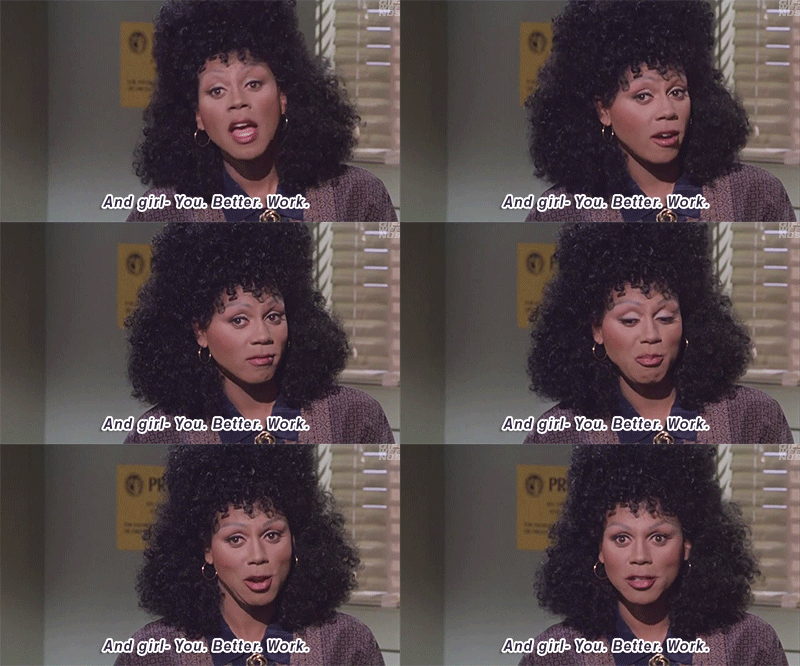
5. Girl, you better work.
What blew me away the most when I was taking this little glimpse into Anthony’s life was her constant WORK. She seems to have been indefatigable in her pursuit of equality. She reminded me that if there is something you want, pursue it relentlessly. She never saw the fruits of her labor, but she didn’t give up. She stayed the course. And I am so grateful that she did.
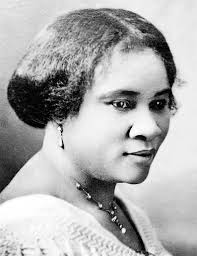
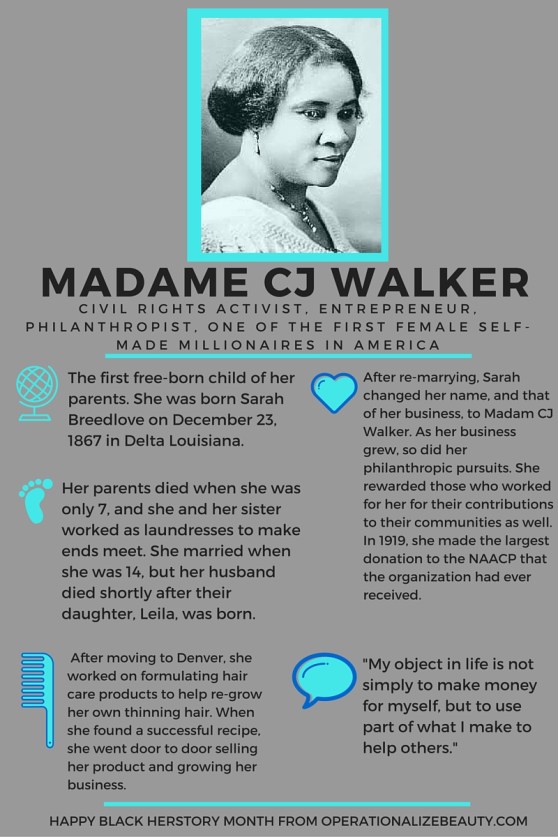
Sarah Breedlove was the first free-born child of her parents, Minerva and Owen Breedlove. She was born on December 23, 1867 in Delta, Louisiana. Though her parents encouraged their children to get an education, the KKK burned down many schools for African American kids in Louisiana.
Sarah’s parents were sharecroppers, and she worked the cotton fields for 12 hours a day before coming home to dig potatoes for the next night’s dinner, feed the chickens, and sweep the yard. On Saturdays, she and her mother and sister (Louvenia) washed clothes for themselves and white people. They got 1$ a week for washing.
Sarah’s mother and father succumbed to disease and she and her siblings were orphaned by 1875; Sarah was 7. One of their brothers, Alex, went to Vicksburg to look for work, and the girls did laundry day and night in order to survive. When crops failed, the girls went to Vicksburg as well. Louvenia married a cruel and dangerous man, and Sarah lived with them until she could stand it no longer and got married herself. She was just 14.
Sarah’s daughter, Leila
After her husband died, Sarah moved to St Louis where she had heard that laundresses could make good money and where there was a large black community. Her brothers were there working in a barber shop, and Sarah learned about hair care from them. She worked hard and was determined to save enough to send her daughter, Leila, to school. Sarah also collected money for St Paul’s African Methodist Episcopal Church, where African Americans could go to learn to read and write, though it was illegal for them to go to school. By 1902, Sarah had saved enough to send her daughter Leila to Knoxville College.
Sarah spent time in women’s kitchens as they tried to straighten and restore their hair. Her own hair was weak and she was going bald. All of the so-called cures only made it worse.
At the 1904 World’s fair in St Louis, she heard Booker T Washington’s wife, Margaret Washington, speak. Sarah was struck by Margaret’s poise, her confidence, and her hair. Sarah went to bed praying that God would stop her hair from falling out. That night Sarah had a dream of Africa– the earth, soil, and vegetation. She knew she had her answer. She would seek out oils and herbs that were native to Africa and try them on her hair.
In 1905, Sarah learned that one of her brothers had died. She moved to Denver to be with his wife and children. In an attic room, she set up her laboratory and got to work developing a formula for her hair. During the day, she worked as a cook for Mr. E.L. Scholtz, who owned the largest pharmacy in Denver. When she thought she finally had her formula just right, she tried it on herself. And it worked! Her hair began growing back in faster than it had ever fallen out.
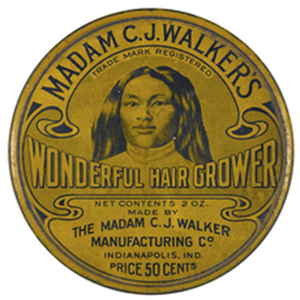
She began going door to door with her three new products: Vegetable Shampoo, Wonderful Hair Grower, and Glossine. She would wash women’s hair with the shampoo, apply the hair grower to nourish the scalp, then apply the Glossine with a specially designed metal comb that had been heated on a stove. She was careful to avoid using words like “good hair” (which usually referred to white hair) and “bad hair” (which usually referred to black hair) because she found them, and the idea behind them, insulting. Most hair care companies were owned by white men, who advertised to African Americans by telling them how unattractive they were and glorifying long straight hair. Black ministers, on the other hand, preached against women straightening their hair instead of remaining how God had created them. Sarah believed that what a woman did with her hair should be her own business, not a man’s.
She used her own before and after pictures in her advertisements, not images of light skinned women with long light colored hair. She conveyed confidence and self-worth in her advertisements, something that was often lacking for women– and especially women of color– at the time.
In 1905, Sarah married Charles Walker, and changed her name, and the name of her company, to Madame CJ Walker. She moved to Pittsburgh, where she and Leila (who had finished school by then), trained salespeople, or agents, to go into women’s kitchens and show them how to use Walker’s products. Every customer was a potential agent, and Madame Walker and Leila talked to them not only about health and beauty, but also about self-sufficiency. They told women they could earn money in a respected profession as a hairdresser or saleswoman, while still being good wives and mothers. Agents could expect to make $5.00 a week, which was a pretty penny in a time when black women typically only made about half that. Black men made about $5.00 a week, while white men could expect to make around $17.00 per week.
In just two years, Madame Walker had nearly one hundred representatives and was making $400.00 a week. She opened the Leila College of Hair Culturists. Women flocked to the college to learn a new profession that would give them pride and independence. Madame Walker left Leila in charge of the business in Pittsburgh, and moved to Indianapolis to spread her products. By 1911, the company was making more than $3,000 a week (about $70,000 in today’s money). For a business run by a black woman, this was almost inconceivable.
In Indianapolis, Madame Walker was outraged when she was asked to pay more for a movie ticket than a white person had to pay. Then and there she began design plans for the Walker building, which would cover an entire city block and include office and factory space, as well as a movie theater for the city’s African American population. The more Madame Walker made, the more she gave, pouring money and energy into her community. In 1913, she made the largest donation of any African American to the construction of the Indianapolis YMCA. She rewarded her agents for making contributions to their community as well.
She divorced Mr Walker in 1913. That same year she attended the National Negro Business League convention in Chicago. She was the richest black woman in America, yet she could not get the attention of the speaker, Booker T Washington. Finally, she stood up and demanded his attention. “Surely you are not going to shut the door in my face,” she said. She told her story. She spoke of cotton fields and the Ku Klux Klan burning schools. She spoke of washtubs and starting her own business. Then she said something no man there had said, “My object in life is not simply to make money for myself, but to use part of what I make to help others.”
And help others she did. Along with giving thousands of women like her the training and opportunities they needed to create a better life for themselves, she was a voice for her people. She once demanded a meeting with the President to address violence against African Americans. When she heard Woodrow Wilson was in a meeting about a farm feed bill and could not be bothered, she wasted no time expressing her anger: “You are talking to us of animal feed when colored people are being murdered in the streets!” In 1919 Madam Walker became seriously ill while on a trip to St Louis. She was rushed home, where she ordered her accountants to make a donation of $5,000 to the anti-lynching fund of the NAACP. It was the largest donation the organization had ever received.
Before she died she said, “I want to live to help my race.”
Madam CJ Walker not only helped her race, she has helped countless women by proving that when life doesn’t provide you with opportunities, you have to make them yourself.
She followed her own path. And that is beautiful.
Sources:
Vision of Beauty: The Story of Sarah Breedlove Walker by Kathryn Lasky
These women rose above the limits put on them by others to accomplish amazing things. And that is beautiful.
We will be adding stories of incredible African American women to this page throughout the month of February.
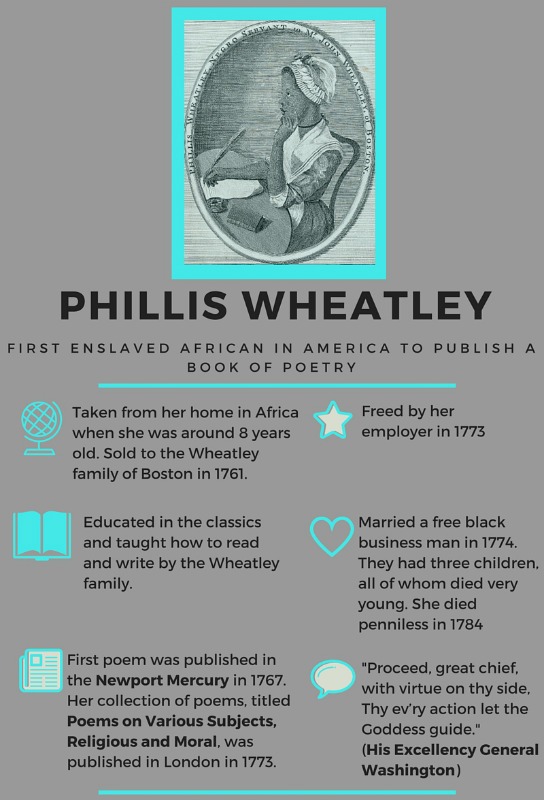
Image above is from NewWorldEncyclopedia.org. Original image was sketched by Scipio Moorhead for the frontispiece of Wheatley’s book Poems on Various SubjectsImage from Biography.com
Women were not allowed to learn to read and write Chinese, so to stay in touch they took it upon themselves to formulate their own means of communication.
In a time when women’s feet were bound, women were kept in doors, and the goal of marriage was to bear sons, women in the Jiangyong County in Hunan province of China found strength and satisfaction in each other. Growing up, girls were confined to ‘women’s chambers’ in their own homes, and would later be confined to the home of their husband’s family. To ease their isolation, girls were brought together as “sworn sisters” until they were married. A laotong relationship was a step further– girls would be brought together by a matchmaker and would sign a contract. The relationship was expected to last for life. In Lisa See’s novel Snow Flower and the Secret Fan See describes the laotong relationship as “… made by choice for the purpose of emotional companionship and eternal fidelity. A marriage is not made by choice and has only one purpose — to have sons.”
When girls were old enough to be married, they were expected to live wherever their husband’s family lived, and sworn sisters were often separated. Women were not allowed to learn to read and write Chinese, so to stay in touch they took it upon themselves to formulate their own means of communication. Nu Shu, or “women’s writing,” was developed phonetically, as opposed to traditional Chinese languages in which characters represent ideas.
Chinese (on the left) compared to Nu Shu (on the right). Image from Onmiglot.com.
Nu Shu was not only written, but embroidered and used to adorn fans. Nu Shu was also found in “Third Day Books,” journals that a woman’s friends and family would make for her upon her marriage. The clothbound books were delivered to the new bride three days after she was married. Inside, family and friends would fill the first few pages with their laments over losing a friend and daughter, and their hopes for her happiness. The rest of the pages were left blank, for the new bride to fill with her thoughts and feelings. Everything was written in Nu Shu, and though the men couldn’t read it, they seemed to think it was harmless and therefore didn’t mind it.
Lisa See’s book, and a movie based on it, have renewed interest in this ancient and secret language. Since girls have been able to go to school with boys and learn traditional Chinese, the number of women who can read and write Nu Shu is dwindling. People like Hu Mei Yue are trying to change that. Every Saturday Mei Yue visits Pumei, a Nushu Cultural Village with a museum and school dedicated to Nu Shu. She teaches the language to any village girls who show up.
One girl taking the class said, “I don’t know how people can write like this. Each word is like a flower.”

 My mom: for real though, big ups to our mommas!
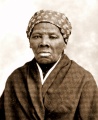 Harriet Tubman: abolitionist, activist, nurse, underground railroad conductor, military hero; buried with military honors at Fort Hill Cemetery in Auburn.
 Lucy Stone: suffragette, abolitionist; convened the first national Women’s Rights Convention in 1850.
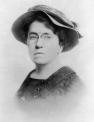 Emma Goldman: fiery speaker and advocate for peace, free love, and birth control; she was deported to the Soviet Union in 1919.
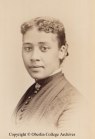 Anna Julia Cooper: born into slavery, Cooper went on to become an author, speaker, and one of the most prominent African American scholars in US history.
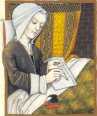 Christine de Pizan: born in Italy in 1364, she is considered a pioneering feminist writer and one of the most notable women writers of medieval times.
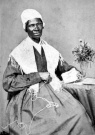 Sojourner Truth: a leading civil rights and women’s rights activist, Truth was born into slavery, but escaped with her baby girl and went on to successfully win her son’s freedom in court.
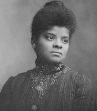 Ida B. Wells-Barnett: daughter of slaves, she became a journalist and led an anti-lynching campaign in the 1890s; she formed the National Association of Colored Women in 1896 and is considered a founding member of what would become known as the NAACP.
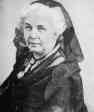 Elizabeth Cady Stanton: early leader of woman’s rights movement; wrote the Declaration of Sentiments (a call to arms for equality).
 Ashley Rhodes-Courter: a former foster child herself, Ashley advocates for children in foster care
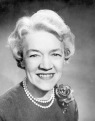 Margaret Chase Smith: politician, U.S. congresswoman, presidential candidate, author; she cosponsored the Equal Rights Amendment with Congresswoman Winifred Stanley in the mid-1940s and worked on improving the status of women in the military.
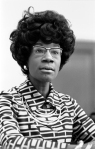 Shirley Chisholm: first African-American congresswoman, and first major-party black candidate to make a bid for US presidency
 Mary Wollstonecraft: English writer, educator, journalist, and women’s rights advocate who argued for equality and educational reforms.
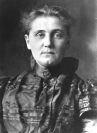 Jane Addams: pioneer for social work, advocate for peace, and social activist; founder of Hull House.
 Mary Astell: English philosopher best known for her theories on the education of women and her critiques of John Norris and John Locke.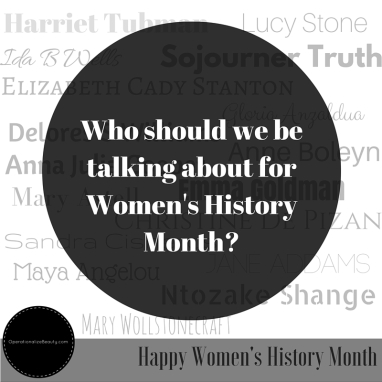

































 skinned women with long light colored hair. She conveyed confidence and self-worth in her advertisements, something that was often lacking for women– and especially women of color– at the time.
 In just two years, Madame Walker had nearly one hundred representatives and was making $400.00 a week. She opened the Leila College of Hair Culturists. Women flocked to the college to learn a new profession that would give them pride and independence. Madame Walker left Leila in charge of the business in Pittsburgh, and moved to Indianapolis to spread her products. By 1911, the company was making more than $3,000 a week (about $70,000 in today’s money). For a business run by a black woman, this was almost inconceivable.
 Business League convention in Chicago. She was the richest black woman in America, yet she could not get the attention of the speaker, Booker T Washington. Finally, she stood up and demanded his attention. “Surely you are not going to shut the door in my face,” she said. She told her story. She spoke of cotton fields and the Ku Klux Klan burning schools. She spoke of washtubs and starting her own business. Then she said something no man there had said, “My object in life is not simply to make money for myself, but to use part of what I make to help others.”
 Before she died she said, “I want to live to help my race.”








 OperationalizeBeauty