

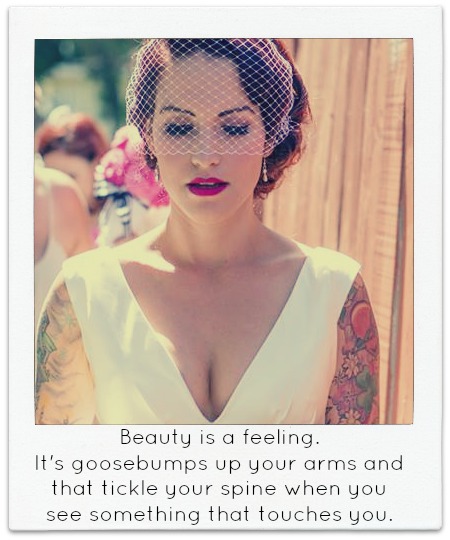
I feel most beautiful when I feel joy; when I’m engaged in a moment of inspiration.

People like Marcy are what make this world beautiful
Meet Marcy, a working mom of two boys. She is proud to be a feminist, an activist, and a soccer mom. Like most moms, her kids keep her busy, motivated, and inspired. What sets her apart is her passion for making a difference. Marcy is tackling huge social issues like domestic violence, child abuse, and poverty every day. She works directly with the families who have been profoundly impacted by these issues.
Social work is a grossly under appreciated, and often misunderstood, line of work. People like Marcy are what make this world beautiful.
Vocation: Social Worker/Activist
Location: Orange County, CA
A bit of background
I’m a mom to two boys, ages 10 and 8. I grew up behind the Orange Curtain (aka Orange County, CA). I’m a feminist and an activist, currently I’m employed as a social worker. I majored in Women’s Studies in 2007 and taught ballroom dance for a few years before going back to school to become a therapist.
When did you start doing what you are doing?
I finished graduate school in 2013 and although my degree is in counseling/marriage and family therapy, I’ve worked in various settings including a therapist at a domestic violence shelter, a counselor at a group home for teenage girls on probation and a social worker. I started as a social worker back in 2013. For almost two years I worked for a non profit that trains and assists foster parents in caring for children placed through Children and Family Services. Currently I work at CFS as a social worker in the continuing courts program. My caseload is generally focused on family reunification and if that doesn’t happen, looking for a permanent placement for the child. I’ve been an activist as long as I could speak.
Why do you do what you do? Who/What inspired you to take this path?
I sort of just fell into what I do now because of training and past experience. I never aspired to be a social worker but it fits for now. It’s been an opportunity to work on a micro level with some huge social issues (child abuse, domestic violence, drug abuse, poverty, incarceration, trauma). It was an adjustment at first and I had a lot of conflicting feelings about working in the system but those feelings make me work harder for my clients. I know how many people feel about child welfare social workers, they see us as busy bodies and kid snatchers and you meet a lot of resistance and every day is a challenge but I love helping families. They don’t always want help at first but with a lot of patience and hope you see a change for the better.
Continue reading “Soccer mom,social worker, advocate”

You know her name, and you probably know some of her story. But did you know…


Continue reading “11 Things You (probably) Didn’t Know About Malala”
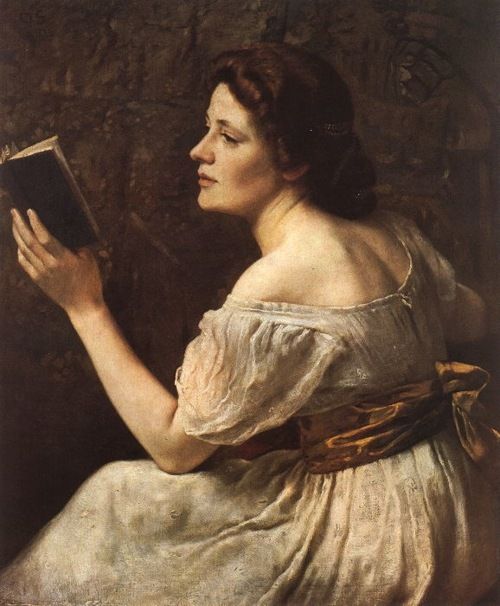
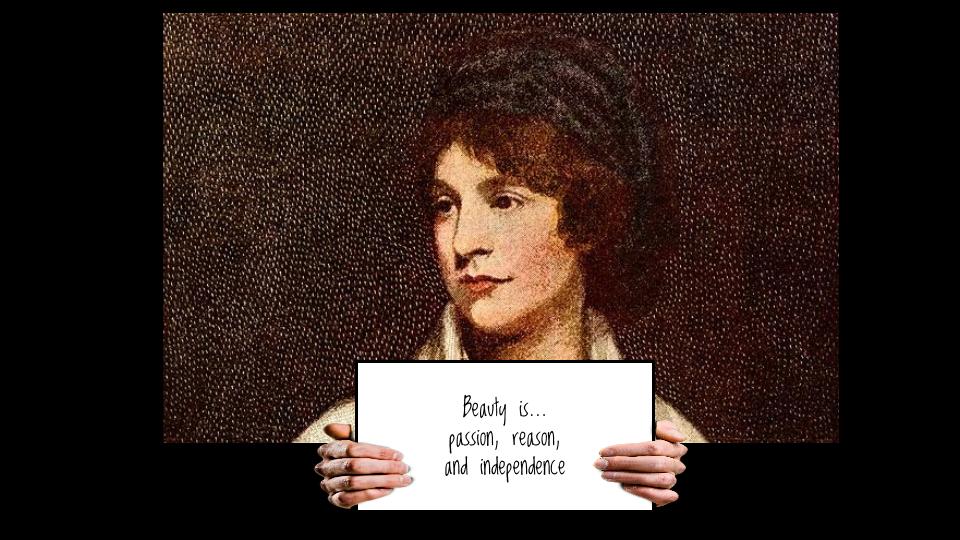
So if we must define beauty as something worth attaining, let beauty be intelligence. And passion. And independence. Let it be what you say it is. Only then will no one have the power to take it away from you.
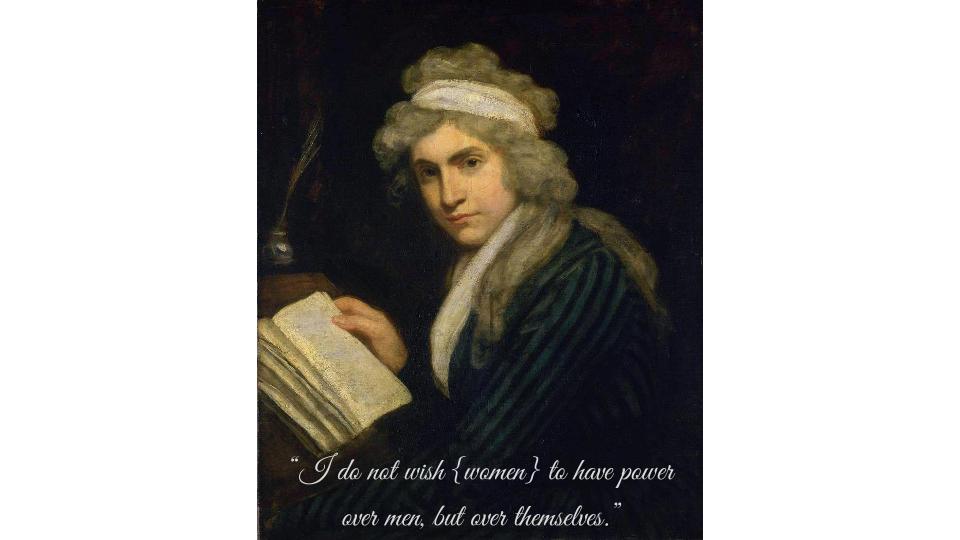
If I could sit down and talk to Mary Wollstonecraft, our interview might look something like this…
Who you are: Mary Wollstonecraft
What you do: Write
Where you do what you do: I have lived in various places around London, as well as Paris. At one point, I had hoped to live in America. I had fond visions of the simple and free life I might live there, but those visions were not to become reality.
Tell us a little bit about your childhood and background.
Honestly, I would really rather not. I do not have many fond memories of my childhood. My father was a gambler who pretended to be a farmer. We were shuffled around quite a bit growing up. Moving residences often become quite a common theme throughout my life. My father had a quick and fierce temper, the full force of which my mother, my siblings, and I often felt. I hated my father’s brutality, though it might be said that I inherited more from him than from my weak-willed mother. I have heard it said that I have his temper and the same hatred of restrictions. Better those than weakness, I suppose. I never understood why my mother didn’t fight back. Why she didn’t try harder to give herself and her children a better life. But, had she left, she would not have been able to support herself. And leaving him would have meant loosing her children (we were, after all, his property) and facing social ostracism. Early in life I vowed I would never be dependent upon anyone for my happiness and well-being. I grew to abhor the image of marriage my parents presented. I, instead, have sought a relationship between equals in which both parties are esteemed and respected. As I wrote in my Vindication, a woman who values and flaunts her weakness might “excite tenderness and gratify the arrogant pride of a man, but the lordly caresses of a protector will not gratify a noble mind that pants for and deserves to be respected.”
My mother, though I most certainly never desired to be like her, was nevertheless dear to me. I yearned for her love and attention, like any child does. However, her affections were taken completely by my eldest brother, Ned. In him she saw no fault, and though it was I who held her hand as she breathed her last, I am certain her affection toward him remained steadfast. I will admit, I have felt resentment and jealousy towards him. He, who was free to pursue the desires of his heart without thought to family duties. He entered the military, and though I repeatedly asked for his assistance in the support of our sisters, he was aloof and unfazed in regard to our struggles.
Most abrasive to me was the education I was restricted from pursuing. At home I had learned to read, but I was hungry for more. I was finally able to attend school when we moved to Beverley in the summer of 1770, but I was sorely disappointed in the curriculum at the local girl’s school. While my brothers studied history, mathematics, and Latin, I was expected to be content to learn skills suitable to women, like needlework and simple addition. I have always resented this, and have written several treatises on the importance of education for women and girls. Indeed, how can men judge women as less intelligent and less capable if we are not even given the opportunity to increase our intellect. Determined as I was to be entirely self-reliant, and as I understood that education was the gateway to opportunity, I read and educated myself in earnest. Happily, men such as John Arden helped shaped my intellect and feed my curiosity early on.
Education was the primary focus of your early work. Tell us a bit about the role education played in shaping your life, as well as that of your sisters.
My thoughts on the matter are expressed in my book Thoughts on the Education of Daughters, but the topic is touched upon in other works as well.
Indeed, I recognized that a girl would certainly not get anywhere in life without the most basic of an education. However, I am not so naive as to think that education alone is a perfect savior. Growing up I heard girls be advised to hide their intellect as not to scare away suitors. What rubbish! Clearly, it is not only the education of girls that needs reforming, but the whole of society itself. As I wrote in Vindication, “men and women must be educated, in a great degree, by the opinions and manners of the society they live in…till society can be differently constituted, much cannot be expected by education.”
Nevertheless, education of the whole mind has always been important to me. I myself held many teaching positions early in life, and was gracious enough to employ my sisters in similar positions. However, I never saw teaching as my heart’s passion. As a woman in the 1700s being a governess or an educator are the only somewhat respectable vocations one may consider. So, I took positions as both, and even ran a school of my own at one point, as a means to an end. The end goal, of course, being to maintain my independence and self-reliance.
And what was your heart’s passion, if not teaching?
I wanted above all to be heard. I found the norms of society rather silly and outrageously confining. I wanted to shake people–especially women–out of their haze. Did they not see the bars they were behind? Beautiful though the bars they may be, they were bars just the same. The home is not the only stage on which a woman can shine. I have always been very aware of my social standing and the expectations put on me. And, when possible I have tried to meet them. For instance, as the eldest daughter, it fell on me to provide care for my mother as her health failed, and to support my sisters as they were unwed. I put my plans on hold to be by my mother’s side as she passed from this world. I rescued my sister from an abusive marriage, even when she had second thoughts about leaving her baby behind (again, the child, as the wife, was the property of the husband). I found gainful employment for my sisters, though they continued to complain about their circumstances. When I found constant work as a writer, I sent most of my earnings to them and subsided on less than what would have been considered reasonable.
So, you see, I did not abandon all the trappings of being a woman in the 1700s. But I so deeply desired to. My independence was of the utmost importance to me. I found the fight for independence in France invigorating and inspiring. I longed for a revolution for women, and was hopeful it would come to pass in Paris. After the king was de-throned, women gained many rights they had not enjoyed before, like the right to divorce and inherit property. But, their freedom was short-lived as those who rebelled against the king’s authority began showing us that they would be no better as rulers. Robespierre’s regime put women back under men’s thumbs, and began executing anyone who did not agree with them. They were bloodthirsty and vengeful, and I turned to images of America for inspiration. There, one could be truly free. There, I could be equal to any man.
And that, I suppose, was my heart’s true passion. The equality of all and the end of injustice and oppression.
Continue reading “Mary Wollstonecraft”

Mary Wollstonecraft is often lauded as a pioneer of Feminism. Her most popular book, A Vindication of the Rights of Woman, was published in 1792 and is considered a groundbreaking work that laid the foundation for the argument for women’s rights.
Mary was a passionate woman who considered independence to be the utmost goal of every individual, but especially women. She was raised by an abusive father and emotionally absent mother. As the oldest sister, she was expected to care for her siblings. Mary struggled to balance this role of care-giver that was placed on her, with the role of independent human she desired for herself. If she was alive today, I would like to think she would be a supporter of OperationalizeBeauty, as she is remembered as a woman who most definitely questioned–and shunned– the labels put on her by others. When she made her way to London to pursue a career as a writer, she took a sort of pride in eschewing the style of the time. She arrived on the scene in thick-soled sensible walking shoes and a beaver cap. She felt she did not need to fit into a world she loathed (the world of the rich and well-connected), and would not waste time making herself attractive for the benefit of others. She absolutely detested the ideal of femininity popular during her lifetime, and eschewed the behavioral norms women were expected to abide by as well. For example, she found it silly that women were expected to lay in bed for anywhere from a week to a month after giving birth, and insisted on being up and about the day after having her first child. She insisted that having a baby was a natural process, not an illness.
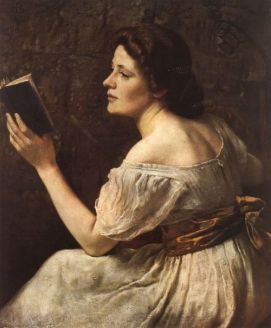
She was quite the conundrum. She did provide for her sisters, finding them employment and sending them money; yet, she did not take their feelings about that employment into account. She was a woman of reason and learning, yet she was fiercely passionate and emotional about causes and people dear to her heart. She was a great supporter of the Revolution in France and held idealized images of America as a land of true freedom, yet she seems to have absolutely reveled in the domestic duties of wife and mother. She valued independence above all, yet became deeply attached to a few people. The attachment she would foster was often unhealthy, and the absence of the object of her affection would send her into depression that resulted in at least two suicide attempts.
 One of her objects of affection was German-Swiss artist Henri Fuseli (left), to whom she grew quite close. Though details are not known for sure, it is said that at one point, Mary showed up at his doorstep and asked to move in with he and his wife. Allegedly, she claimed she sought no physical relationship with Fuseli and posed no threat to his marriage; she simply could not live without seeing and talking to him daily. She needed a spiritual connection with him. Fuseli’s wife threw Mary out and forbade Henri from ever speaking to her again. Later, Mary would propose a similar, and incredibly unorthodox, living arrangement with her estranged husband (and father of her first child) and his paramour.
Mary was a firecracker to say the least. Prone to swings of unbridled  energy and focus, as well as boughts of depression and self-doubt. Those close to her, like friend and publisher Joseph Johnson (right), learned to maneuver these dark spaces of Mary’s personality. Once, when penning a rebuttal to Edmund Burke’s Reflections on the Revolution in France, she expressed to Johnson that she wasn’t sure if she should continue. Having already printed what she had written so far, he assured her that if she didn’t feel up to the task of completing the work, he would throw the printed pages into the fire and forget the piece altogether. With the perfect response, Johnson struck a cord with the proud and zealous Mary, who quickly got back to work and completed the piece.
Mary lived and loved fiercely. She is a shining example of a woman who fought for the right to CHOSE her own life path, which is what most feminist leaders have called for from the beginning. She wanted to be the one who decided what her life would look like. She enjoyed living and writing as a single woman in London and Paris. She likewise enjoyed living in a small cottage with a simple garden outside the city and raising her child (very much parallel to the happy suburban housewife). What stayed constant in Mary’s life was her passion to carve her own path, the high value she placed on reason and education, and the overall driving desire for independence that informed much of her life’s trajectory.
If Mary could send in a definition of beauty, it might look something like this:

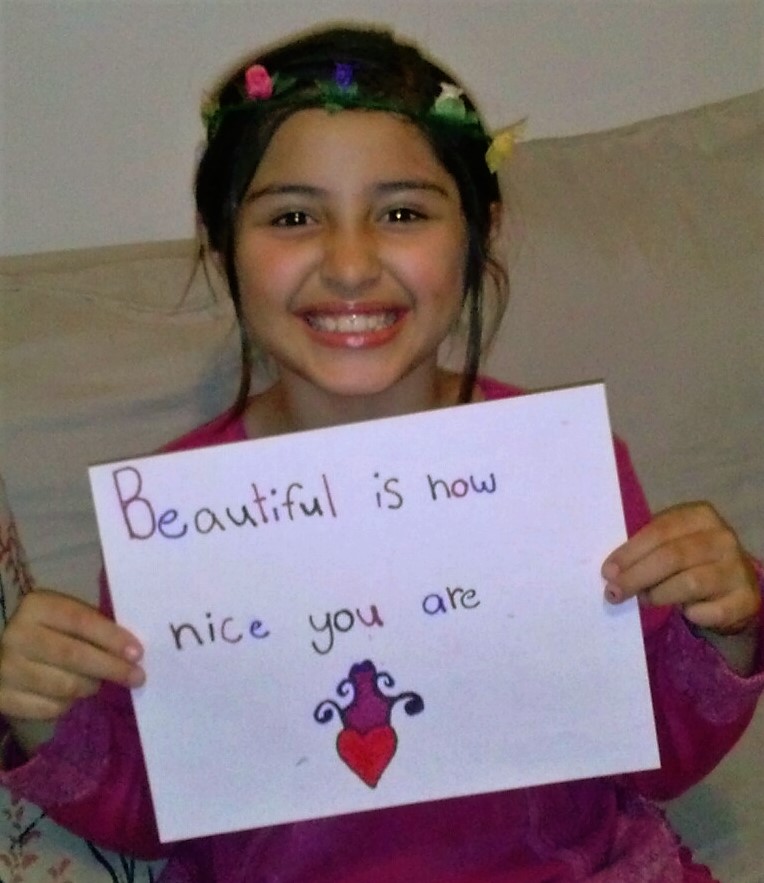
Daniela and her family make beautiful birthday cakes for kids who are dealing with hardships. She hand delivers them to the birthday boy or girl and sings them “Happy Birthday.” All while fighting her own battle.
Daniela Delgado is just like any other 8 year old girl. She goes to school, loves reading and participating in running club, and spending time with her family.
But Daniel is also extraordinary. She and her family make beautiful birthday cakes for kids who are dealing with hardships. She hand delivers them to the birthday boy or girl and sings them “Happy Birthday.” All while fighting her own battle.
Daniela took some time out of baking and running and reading to answer a few questions for OperationalizeBeauty.
(Warning: you may experience renewed feelings of hope for our future after reading this interview.)
Who she is: Daniela Delgado from Daniela’s Little Wish
What she does: Bake birthday cakes at no cost for kids with life threatening illnesses or disabilities and kids suffering a sad situation in their lives.
Where she does it: Stamford, Connecticut, but I travel all around Connecticut to deliver my cakes and now I am starting a project to deliver cake toppers to other states (sadly not the cakes, I cannot send them).
Meet Daniela
I am 8 years old and I am from Stamford, CT. I do not have siblings. I live with my parents, both are immigrants from Colombia (my mom) and Mexico (my dad) and I am so proud to call myself Colombian-Mexican-American. Like a normal girl I play with my dolls, I love reading books (it is my passion, too) and do exercise (I am in a running club to be healthy). I have a beautiful 3 pound of “hair” yorkie and I love to camp. I love nature and animals.
My mom always said that I am very mature for my age and I agree! I help my parents not to worry about me. I am never mean to anybody and I am very respectful to others and especially adults (I love to talk with them). My parents are raising me well, teaching me good values and morals.
I love to help others. I am so happy with myself!!
P.S I am a little disorganized but I am working on that!!
What is Von Willebrand and how does it affect you?
I have a health condition called Severe von Willebrand Disease Type 1. It is a condition that can cause extended or excessive bleeding. The condition is most often inherited (my mom has it too) and it is a deficiency in our impairment of a protein called von Willebrand factor, an important component in your blood-clotting process. In general, it takes longer for people with von Willebrand disease to form clots and stop bleeding when they’re cut.
I live a normal life. I just have to be very careful not to hit my head, my stomach, or my inner arms. I have to avoid contact sports and stay away from heights of more than 8 feet. I always carry with me special medication that could save my life in case of minor and big accidents. My school and my classmates have to know about my condition and avoid rough play with me. I feel special because I have a nurse in school that takes care of me and the secretary of my school, Patti, always takes care of my minor boo-boos and calls my mom about the incident. I am having nose bleeding episodes without a reason and my mom taught me how calm I have to be, lay down, pinch my nose in a special place, take my medicine and rest for a while. I always wear a medical bracelet with my condition and it is good because in case of accidents doctors and paramedics know what to do. My body is changing, so I can expect any effect related with my condition. I do not feel shy or different to anybody, I just have to be careful with myself.
Tell me a little about Daniela’s Little Wish. When did you start DLW? What inspired you to start? What exactly do you do?
Well, I started this community group when I was just 4 years old. My mom and dad were making a cake and I raised my magic wand (spatula) and wished that I could make cakes for kids suffering in this world with sickness, disabilities, domestic violence and any situation that makes them feel sad or different.
Continue reading “Beauty is…little hands doing big things.”
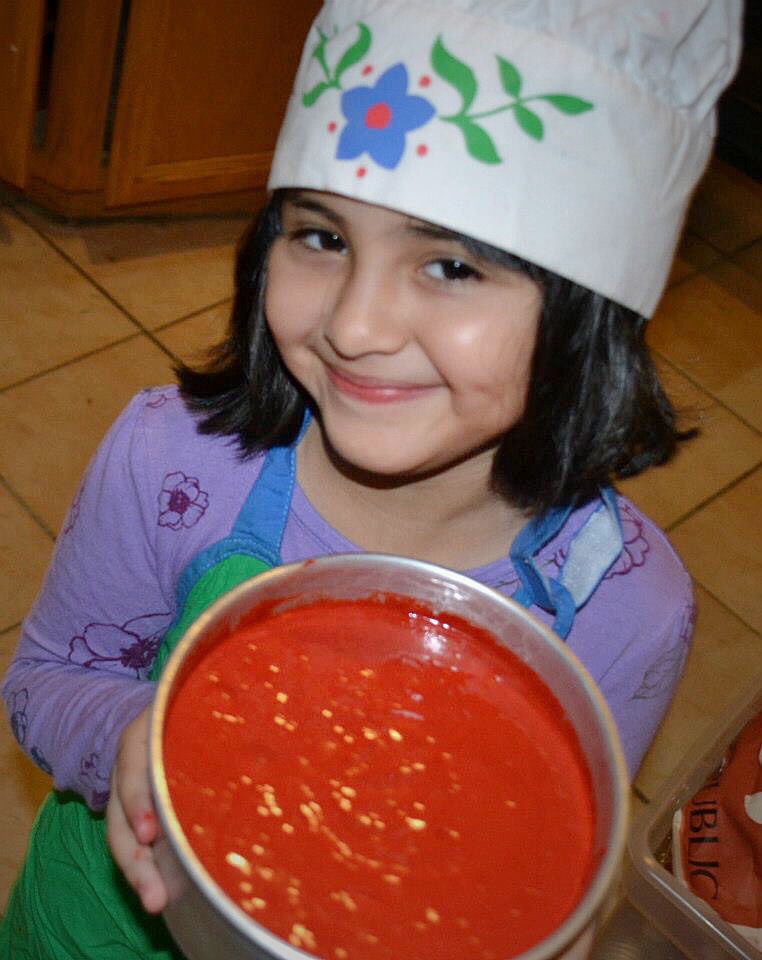
Four years ago Daniela made a wish. She wished that she could make cakes for kids that were suffering with sickness, disability, domestic violence, or “any situation that made them feel sad or different.”
Meet Daniela Delgado.
All of our posts this week will revolve around this beautiful little lady.
At only eight years old, Daniela is reminding us what beauty really looks like.
Four years ago (yeah, that’s right, she was only four years old) Daniela made a wish. She wished that she could make birthday cakes for kids that were suffering with sickness, disability, domestic violence, or “any situation that made them feel sad or different.” Because every kid deserves a cake on their birthday.
And she has been baking up a sweet storm ever since.
Learn more about Daniela and her incredible work in tomorrow’s post.




 OperationalizeBeauty